Middletown Quality Gutters cleans, repairs and installs gutters in Berkeley Heights, and after more than 20 years of this work we treat nearly every house here as a leaf question first. The roof sheds water the same way it does anywhere, but what settles in the trough between storms decides how well that water actually gets off the house.
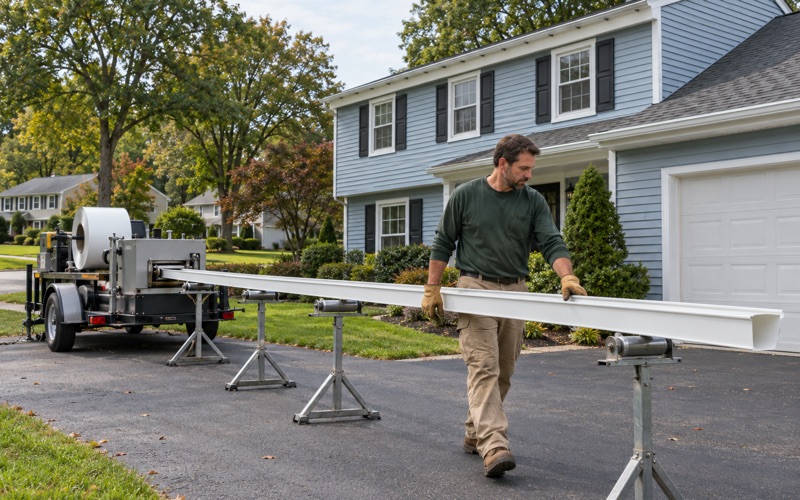
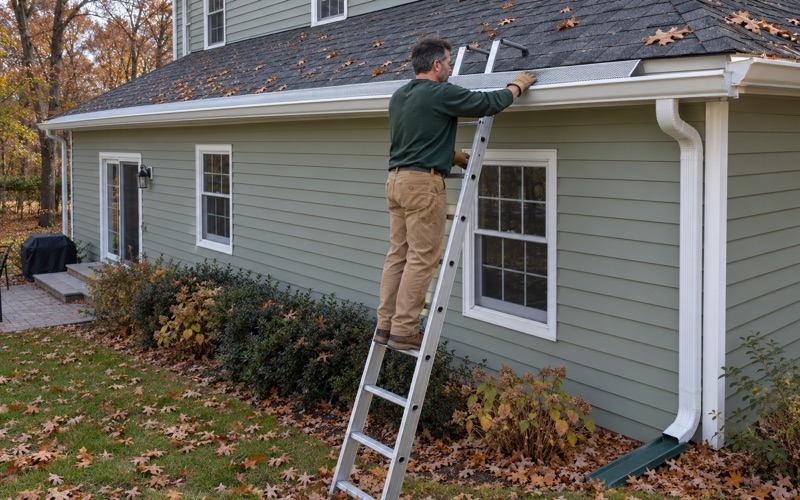
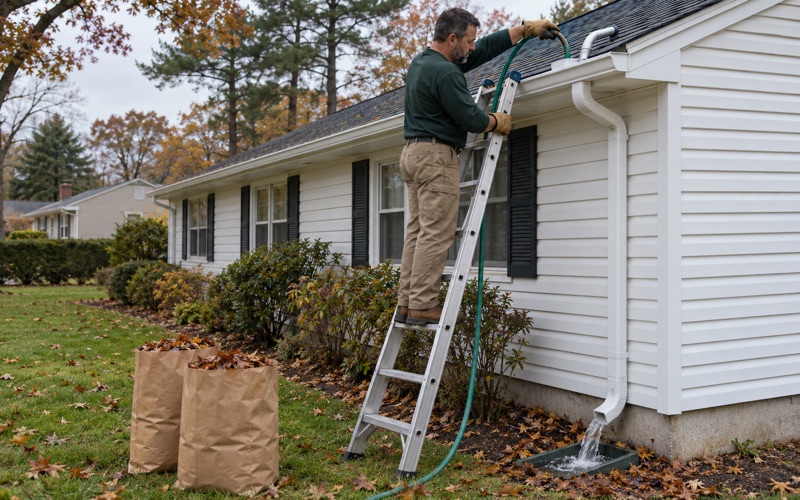
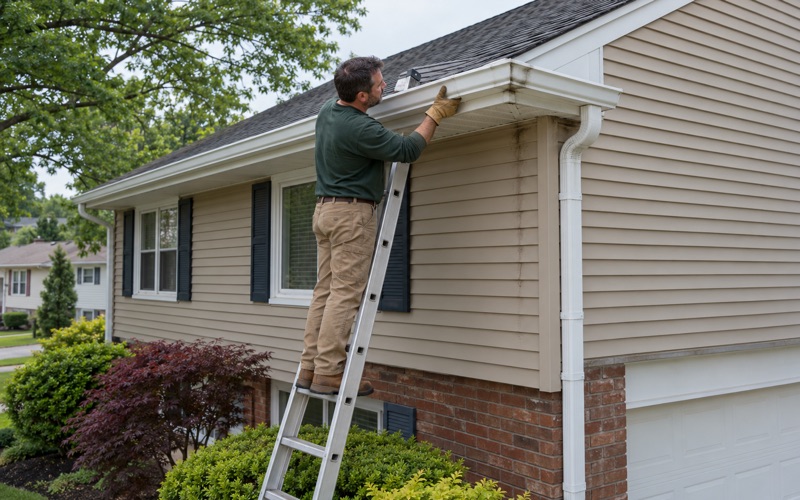
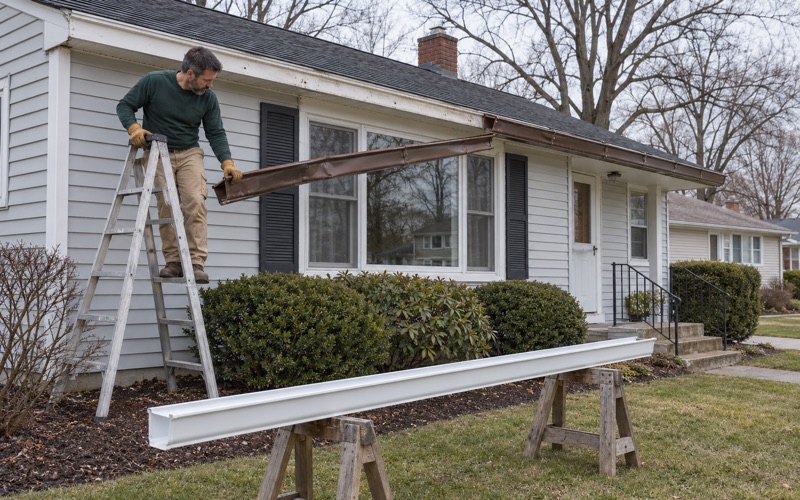
Most of what we do in the township falls into three jobs: clearing out a full season of debris, refitting runs that sag or pull away after a limb strike, and replacing tired sections with seamless aluminum formed on site from coil, one piece for each run. Every cleaning visit ends with each downspout flushed and the debris bagged, so nothing is left on the lawn or at the curb.
The sections below cover what changes about gutter work here: how much shade sits over the roofline, how a cleaning fits around the two leaf collections, where trimming a limb ends and a permit begins, and how storms and guards figure into the decision. Before-and-after photos come with every cleaning and repair, so the owner sees the result without climbing a ladder.
Gutters Under a Berkeley Heights Canopy
How Much Shade Sits Over the Roofline
Berkeley Heights is a wooded township by every estimate available. Curb Canopy, a third-party source working from i-Tree urban canopy rates, puts its current tree canopy at 58.0%, with data last updated February 2026. That is an outside estimate rather than a township measurement, but it matches what a gutter crew sees from the ladder on most streets.
Under that much cover, gutters collect leaves, seed pods and twigs every fall and again in spring. A trough half full of packed leaves overflows in a moderate rain, and the water then sheets down the fascia and lands at the foundation instead of leaving through the downspout. That overflow, not the leaves themselves, is what does the damage.
Lots Beside the Watchung Reservation
The Watchung Reservation includes 305 acres of the township, a large block of woodland inside the municipal line. A house beside any wooded edge, park land included, catches debris from trees the owner does not control and cannot trim, so its gutters fill on the forest’s schedule rather than the yard’s.
On those lots we plan for the worst-facing roof plane, not the average one. The slope under the tallest branches usually needs a larger outlet or an extra downspout, and that run is the first place we look when an owner describes overflow at only one corner of the house.
Sizing Runs for Roof Area and Leaf Load
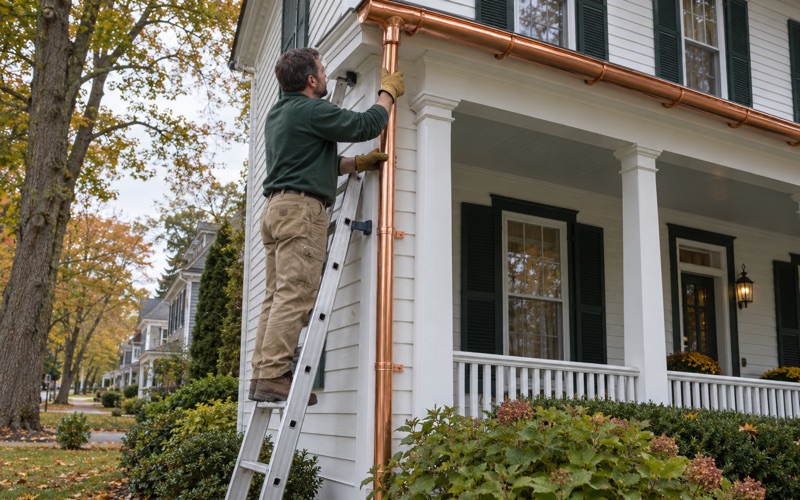
We pick gutter and downspout sizes for the roof area that drains to each run, not by habit. On a typical detached house here that often means 6-inch K-style seamless gutters with 3x4 downspouts, because a wider trough and a larger leader are harder to choke with a clump of wet leaves.
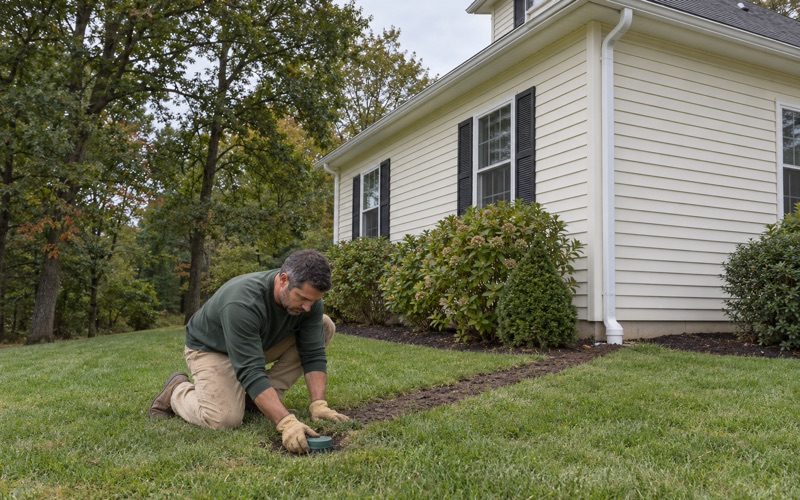
Owners occupy 93.3% of occupied homes and 83.6% of units are detached, according to the American Community Survey 2024 five-year estimates, so most gutter decisions here belong to the homeowner. In the township’s townhouse communities we check the master deed or management office first. Every downspout is followed to where its water lands, and if that is against the foundation we propose an extension, a pop-up emitter or a drywell.
Looking for gutters closer to North Arlington? See North Arlington Gutters.
Timing Gutter Cleaning Around Leaf Pickup
Leaf season here has two collectors, and which one serves a house depends on whether it fronts a township road or a county road. Timing a gutter cleaning against those passes decides what happens to the owner’s raked leaves, and it keeps a freshly cleaned gutter from refilling before the trees are bare.
Township Roads: Paper Bags, Section by Section
On township roads, the Department of Public Works collects leaves by section, and its 2021 notice said each section is picked up twice during the leaf season. That notice asked residents to put leaves in paper biodegradable bags neatly stacked at the curb, and it warned that bags holding anything other than leaves, or bags stacked on a driveway, would be rejected.
Gutter debris is rarely pure leaves. It carries shingle grit, twigs and seed pods, so tipping a gutter’s contents into a curbside leaf bag can get the bag left behind. Our crews bag what comes out of the gutters separately and take it away, which keeps the owner’s own leaf bags clean for the township truck. The Department of Public Works can be reached at 908-464-2700, extension 2167.
County Roads: Two Passes From Union County
Several roads through town are county roads, and Union County’s crews collect leaves on those separately. The county’s 2025 schedule listed Plainfield Avenue and Mountain Avenue for November 3, Horseshoe Road and Springfield Avenue for November 5, McMane Avenue and Valley Road/Glenside Avenue for November 6, and Diamond Hill Road for November 7, with a second pass running from December 1 through December 9.
The county takes “leaves only,” loose, bagged or containerized, and its schedule says branches and other cut vegetation will not be removed. Its dates are “on or about,” conditions permitting. Both the county and the township ask residents not to block catch basins, which matters for any downspout line that discharges near the street.
Picking the Visit Date
For most houses we suggest a cleaning after the bulk of the leaves have dropped but before the last collection pass, so whatever the owner rakes from the beds and lawn still has a pickup to go to. After the final pass, raked leaves are the owner’s to dispose of, though the gutter debris we remove leaves with us either way.
A second, lighter visit in spring catches seed pods and flowers before summer storms. Houses under the heaviest cover sometimes need an extra check partway through the fall, because a single wet week can fill a trough that was clear a month earlier.
Trimming Limbs Off the Gutter Line vs Removing a Tree
Cutting Back What Hangs Over the Gutters
Cutting back limbs that overhang the gutter line is ordinary pruning, and it does more for a clean gutter than any guard. Branches resting on or just above the roof edge drop leaves straight into the trough and scrape the shingles and gutter lip in wind.
During a cleaning we note which limbs are feeding which run and include them in the photos, so the owner can show a tree company exactly what to cut back. If the conversation moves from trimming toward taking a tree down, that is a different process in Berkeley Heights and worth confirming with the township before any work is scheduled.
When Removal Needs a Tree Removal Permit
The township’s Trees page says anyone who wants to remove a tree over six inches in diameter at breast height (DBH) from a property needs a tree removal permit, and so does a street tree of 2.5 inches DBH or greater in the right-of-way. Permits are issued by the Zoning Officer, and the ordinance, amended in 2024, applies to all properties.
Fees step up with the number of trees: $25 each for up to three trees a calendar year, $75 each for the fourth through tenth, and $250 for every tree after that. The Zoning Officer can be reached at 908-464-2700 or trees@bhtwp.com, and that call belongs before a contractor schedules a removal to clear a roofline.
Replacement Planting and Registered Tree Companies
Section 12.16.070 of the township code, amended by Ordinance 8-2024 and adopted April 30, 2024, attaches replacement requirements to a permitted removal. Replacement trees are sized by the trunk diameter of what came down, at least half must be native species from the Environmental Commission’s list, and they must be planted within four months of the removal or during the next planting season, then monitored for two years.
The permit application asks for a lot sketch, the reason for removal, and the tree company’s New Jersey Board of Tree Experts registration along with its licensed tree expert or licensed tree care operator number. For a gutter owner the practical point is that removing a tree over the six-inch threshold brings a permit, fees and replanting, so trimming the limbs over the eaves is where most owners start.
Storm Limbs, Hangers and Gutter Guards
The July 1, 2013 Tornado
Trees are how storms reach a house here. On July 1, 2013, the National Weather Service confirmed an EF0 tornado that touched down at 9:17 a.m. near the Passaic River just west of Garfield Street, passed northeast through New Providence and lifted in Summit near Evergreen Avenue.
The track ran about 4.8 miles with estimated winds of 85 mph, and the survey described extensive tree damage along the path, the greatest at the sewage treatment plant near Snyder Avenue. No count of damaged gutters exists, but a limb coming off the canopy is how most storm damage finds its way to a gutter run.
Bent Hangers, Pulled Spikes and Soft Fascia
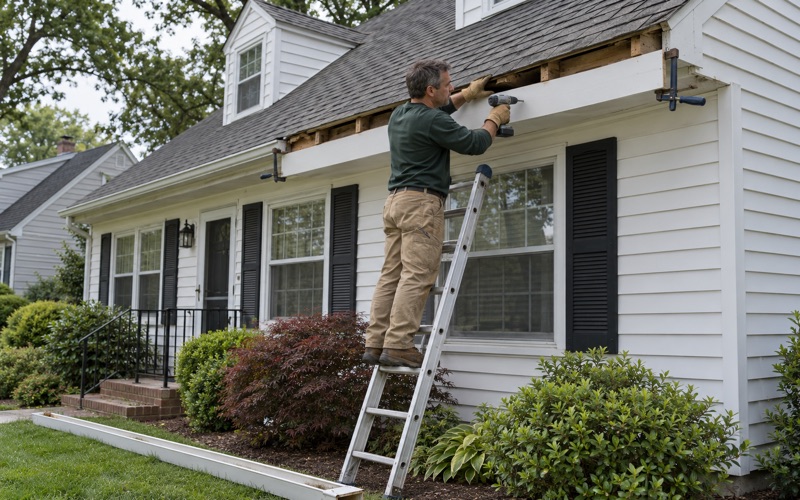
A limb that lands on a gutter usually crushes the front lip, bends the hangers and pries the back of the trough away from the fascia. Older runs held with spike and ferrule fasteners tend to pull straight out, while hidden hangers screwed into sound wood hold their shape and spread the load along the board.
Before new gutters go up after a strike, we check the fascia behind them for rot. Years of overflow from a clogged gutter often soften that board, and we show the owner the soft wood before replacing it. Estimates list new gutters and repair work on separate lines, because New Jersey taxes the two differently.
Are Gutter Guards Worth It Here?
Under heavy canopy, guards are often worth considering, but only when they are matched to the trees on the lot. Broad oak leaves tend to sit on top of most screens, while pine needles slip through coarse openings and lodge point-first, so a lot with pines nearby calls for a finer screen such as stainless steel micro-mesh.
No guard ends maintenance under trees this dense. Micro-mesh still collects a mat of seed pods and fine debris on its surface, and that mat needs brushing off during the same fall visit that would otherwise have been a full cleaning. What a well-chosen guard changes is how quickly the trough fills between visits.
Downspouts Near the Passaic River
The Passaic River forms the township’s northern border, and certain portions of Berkeley Heights are located in flood zones, including homes and some downtown Springfield Avenue commercial areas. On those lots we pay close attention to where each leader discharges, keeping water away from the foundation without pushing it toward a neighbor’s yard.
Leader outlets are never tied into the sanitary sewer, and every estimate says where each one will discharge. On a low lot that may mean a longer extension or a pop-up emitter set well out in the lawn, chosen so the water from a full gutter has somewhere to go besides the basement wall.
- 20+ Years on Gutters
- Seamless, Formed On Site
- Before-and-After Photos