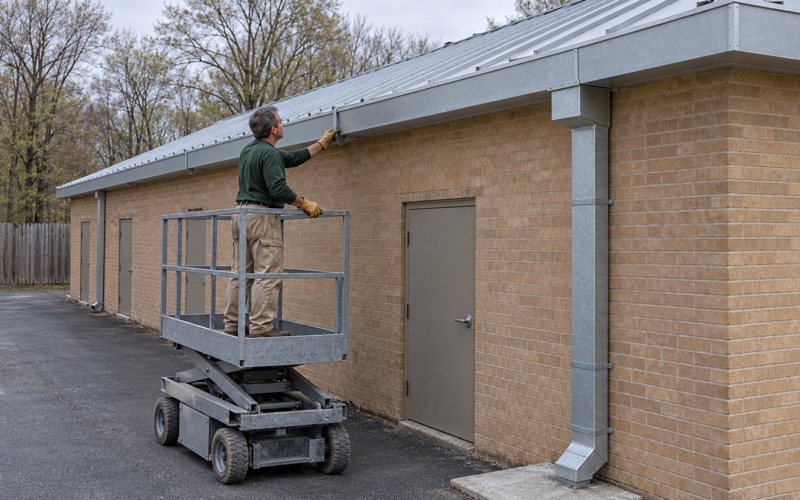
Middletown Quality Gutters has spent more than 20 years installing, repairing and cleaning gutters, and our work on gutters in Clark starts with one question: where does each downspout send its water? A gutter that fills and spills, or a leader that dumps against the foundation, turns an ordinary rain into a wet basement or a soggy side yard. We look at the whole path, from roof edge to ground.
On a typical visit we walk the roofline, check the fascia boards behind the gutters, measure the roof area draining to each run and follow every leader to where it empties. That walk tells us whether the house needs a cleaning, a few repairs, new seamless runs or simply a better place for the water to land. The written estimate then says exactly where each outlet will discharge.
We never tie a leader outlet into the sanitary sewer, and we would rather keep rainwater on the lot, where it can soak in, than hurry it toward the street. In Clark that preference lines up with how the township handles its own rainwater, and with the stream that runs through the middle of town.
Where Clark’s Flooding Starts
Clark sits in the Robinson’s Branch watershed, which covers parts of Clark, Westfield, Scotch Plains, Edison, Woodbridge and Rahway and includes the Clark Reservoir and Milton Lake. Robinson’s Branch is a branch of the Rahway River, and Pumpkin Patch Brook flows north from Woodbridge into Clark to join it. That arrangement shapes what happens to the rain that falls on a Clark roof.
A Brook That Backs Up
Wikipedia’s article on Pumpkin Patch Brook says the brook is frequently inundated by backflow from Robinson’s Branch, and that most of the flooding in Clark originates from it. The same article describes that flooding as generally relatively moderate, with severe flooding in Clark and Woodbridge seen during hurricanes and nor’easters.
It also notes that suburban development in both townships has increased surface water runoff over impervious land. Roofs are part of that impervious surface. A shingled roof sheds nearly everything that lands on it, and the gutter system decides whether that water reaches the ground slowly on your lot or leaves it quickly as concentrated runoff.
The Old Reservoir on Robinson’s Branch
Robinson’s Branch is held back in Clark by the dam of a reservoir built in 1907 for water supply. It is the largest body of water in Union County and is now decommissioned. Union County bought it from the Township of Clark for $1.00 in 2008, and the county reported in 2021 that an environmental assessment, including testing of the water and sediment, was under way.
No flood-control role is documented for the reservoir, so we never count on it to protect anyone’s yard. What it tells a homeowner is simpler. Clark is a town built along a stream, and the water a house sends off its lot joins everything else moving downhill through the same small watershed.
The Practical Question at the Downspout
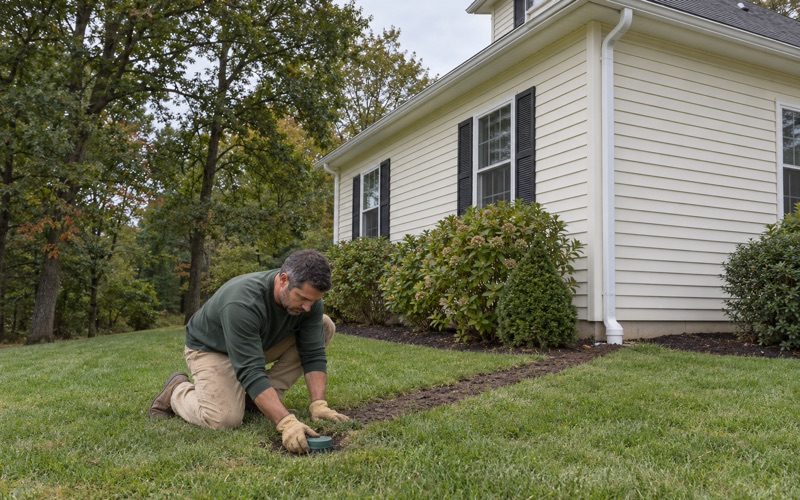
For a Clark house, what a downspout sends toward the brook is the practical gutter question. A leader that empties onto a driveway pushes water straight to the curb, while one that empties onto lawn or into a drywell gives it time to soak in. We follow each one and propose an extension, a pop-up emitter or a drywell wherever water now lands against the foundation.
FEMA lists Clark as National Flood Insurance Program community 345290, with a current effective flood map dated September 20, 2006. If your property sits near a mapped flood area, we take extra care to keep downspout discharge away from the foundation and out of the low spots where water already gathers after a storm.
Looking for gutters closer to Highland Park? See Highland Park Gutters.
Catching Roof Water the Way the Township Does
The township has already shown what a roof can do for the watershed instead of against it. The same approach scales down to a single-family lot, because on a house the gutters and downspouts are already doing the collecting.
The Public Works Cistern
Clark keeps its own roof water. According to the Rutgers Water Resources Program, stormwater runoff from the township’s Public Works building is collected in a 5,000-gallon cistern, which supplies a sustainable car wash that uses harvested rain water to wash cars. Runoff from the car wash then flows to a rain garden on the Arthur L. Johnson High School property.
That work came out of a partnership among Rutgers Cooperative Extension, the Township of Clark and the City of Rahway to reduce stormwater runoff and nonpoint source pollution in the Robinson’s Branch watershed. At town hall, porous asphalt in the parking spaces lets rain soak into the ground. The idea behind all of it is the one we bring to houses.
Rain Barrels at the Downspout
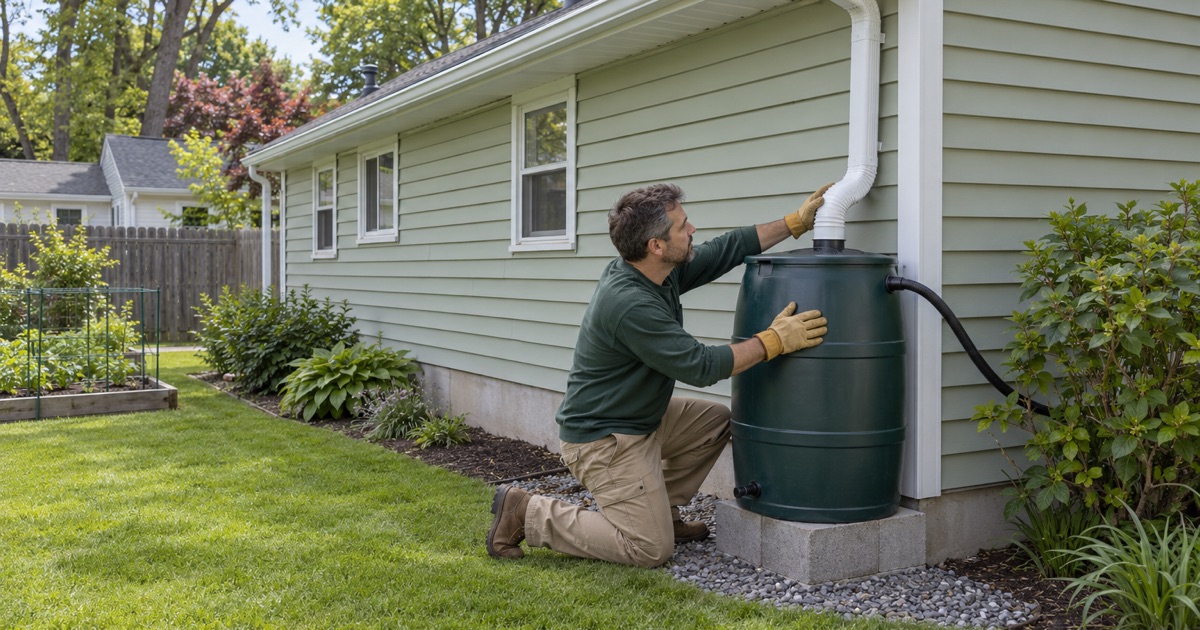
A rain barrel is the household version of that cistern. Set under one downspout, it catches water off that section of roof for watering beds and vegetable gardens, but its overflow still has to go somewhere. We fit the leader to meet the barrel, then direct the overflow away from the foundation with an extension or a buried line.
Barrels work best on smaller runs, such as a garage or a back porch roof. The main roof of a two-story house can fill a barrel quickly in a heavy rain, so we still size the leader for the full roof area and treat the barrel as a bonus rather than the drain the house depends on.
Rain Gardens and Drywells
A rain garden is a shallow planted bed that takes downspout water and lets it soak in, much like the one at the high school. On a Clark lot it usually sits downhill from the house, well clear of the foundation, fed by an extension or an underground downspout line. We run the line and set the outlet; the owner or a landscaper handles the planting.
Where there is no room for a garden, a drywell buried in the yard does a similar job out of sight. New Jersey’s stormwater rule keeps dry wells above the seasonal high water table, and on ground where that table sits high, a pop-up emitter on open lawn is often the better choice.
Gutters on Clark’s 1950s Houses
A Town Built in One Burst
Clark grew from 4,352 residents in 1950 to 18,829 in 1970, and its housing shows it. Census estimates count 1,964 homes built between 1950 and 1959, or 32.4 percent of the township’s housing, with another 614 from the 1940s. Union County describes Clark as a former farming community that developed rapidly between 1949 and 1989 and is now nearly fully developed.
Most of those homes are owner-occupied detached houses. On houses of this age, the drainage layout often dates from construction even when the gutters themselves have been swapped out, so a leader may still empty at a corner where the soil has settled toward the wall. Moving that discharge point is frequently the most useful change we make.
Fascia Before New Gutters
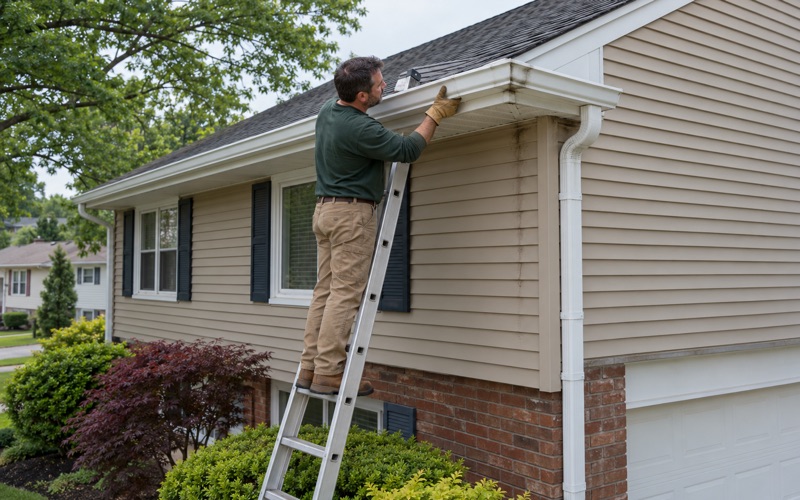
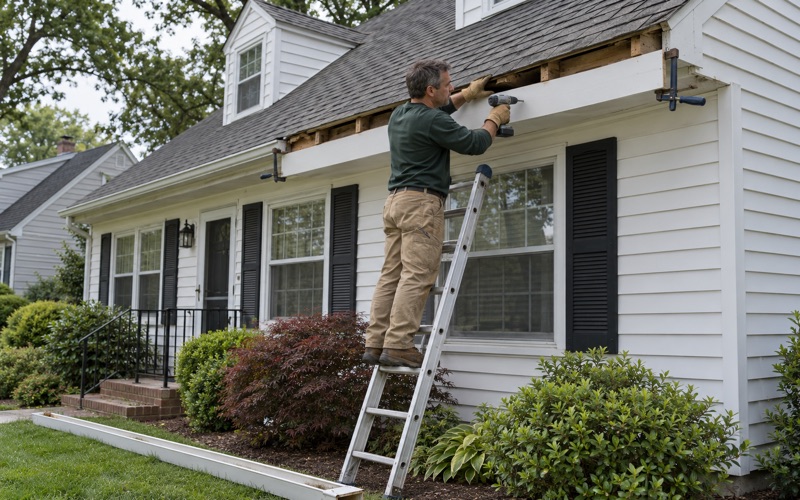
Before we hang new gutters on an older house, we check the fascia board behind them. Years of overflow can soften that wood, and a new gutter fastened into rot will pull away. When we find soft wood, we show it to you before replacing it, so the repair is something you have seen rather than a line on an invoice.
We also look at the drip edge and gutter apron where the roof meets the gutter, because a missing apron lets water run behind the trough and back onto that same board. Kickout flashing gets checked wherever a roof edge ends against a wall, since that is a common spot for water to slip behind siding.
Sizing and Seamless Runs
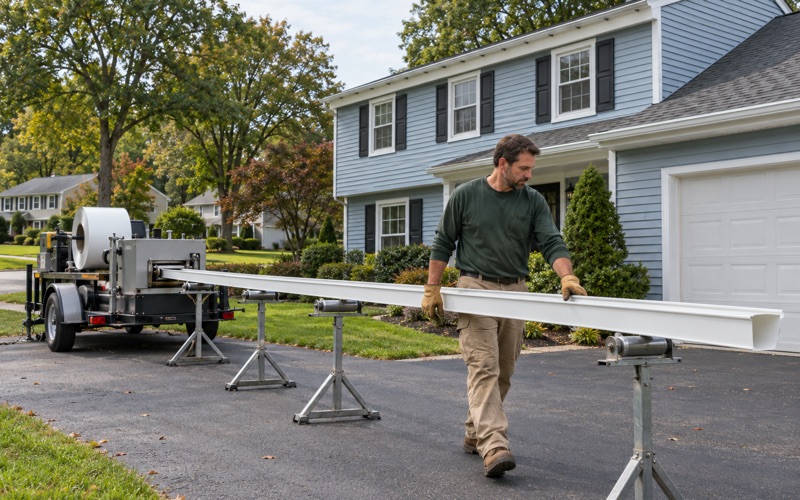
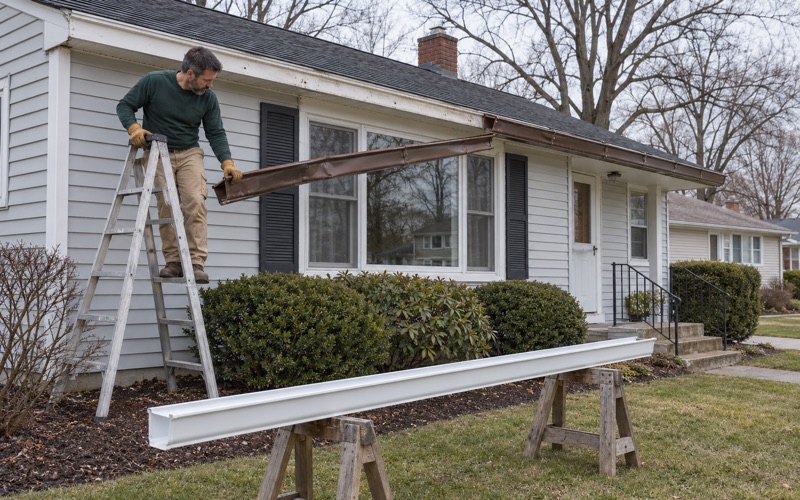
We pick gutter and downspout sizes for the roof area that drains to each run, not by habit. A long rear slope on a ranch or a cape may call for 6-inch K-style seamless gutters and 3x4 downspouts, while a short front run can manage with less. Every run is formed on site from .032 aluminum coil as one continuous piece.
Corners use box or strip miters sealed with tripolymer gutter sealant, and wide-flange outlets help leaves pass instead of plugging the leader. We hang the runs on hidden hangers rather than spike and ferrule, which tends to work loose in older wood over time.
Gutter Service Across Clark
Most calls we get from Clark owners are about upkeep, not a whole new system. Whatever the job, we finish by running water through the downspouts and watching where it lands, because that is the part of the work a homeowner rarely sees from the ground.
Cleaning That Ends at the Ground
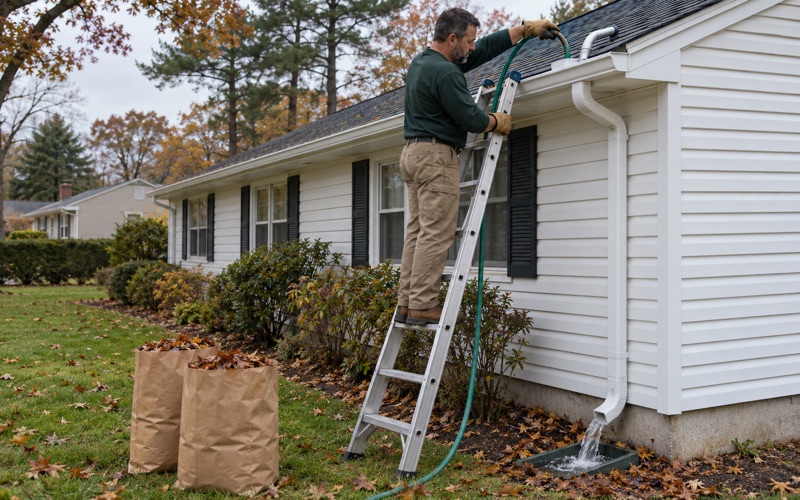
A cleaning visit covers more than the troughs. We flush every downspout to confirm it runs clear, bag the debris rather than leaving it on the lawn or at the curb, and send before-and-after photos so you can see the work without climbing a ladder yourself.
Cleaning is also when we notice a leader that has separated from its extension or an elbow packed solid with silt. Those small fixes keep water flowing to the spot you chose for it, whether that is a rain barrel, a garden bed or a pop-up emitter out in the lawn.
Guards Matched to Your Trees
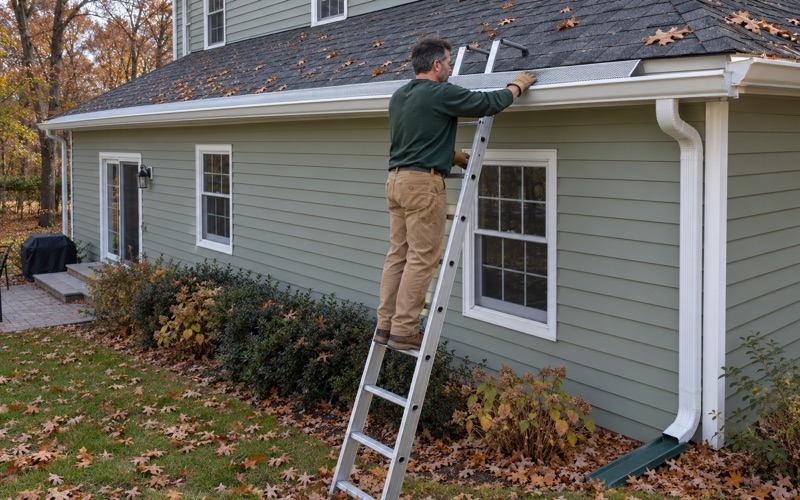
Gutter guards should be chosen for the trees over the roof. Pine needles slip through coarse screens and lodge in the outlets, so on a lot with pines we lean toward stainless steel micro-mesh. Oak leaves are larger and tend to sit on top of most screens until they dry and blow off, which changes what works.
No guard makes a gutter maintenance-free, and we say so before you buy one. A good match simply stretches the time between cleanings and keeps the downspouts, the part that decides where the water goes, from clogging during a fall storm.
Repairs, Replacement and Copper
Many Clark gutters need repair rather than replacement: a sagging section rehung, a leaking corner resealed, a crushed elbow replaced. When a system is worn through, we quote new seamless runs, and the estimate shows repair work and new work on separate lines so the choice is clear.
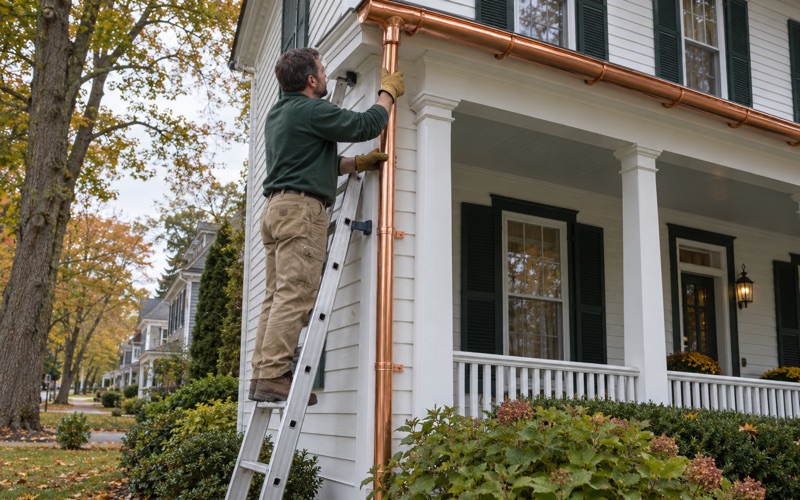
For houses with traditional details, we can match copper or half-round gutters with a double-bead profile to the age and style of the home. Sixteen-ounce copper weathers to a patina over the years, and it suits the handful of Clark homes that predate the postwar building boom.
- 20+ Years on Gutters
- Seamless, Formed On Site
- Before-and-After Photos