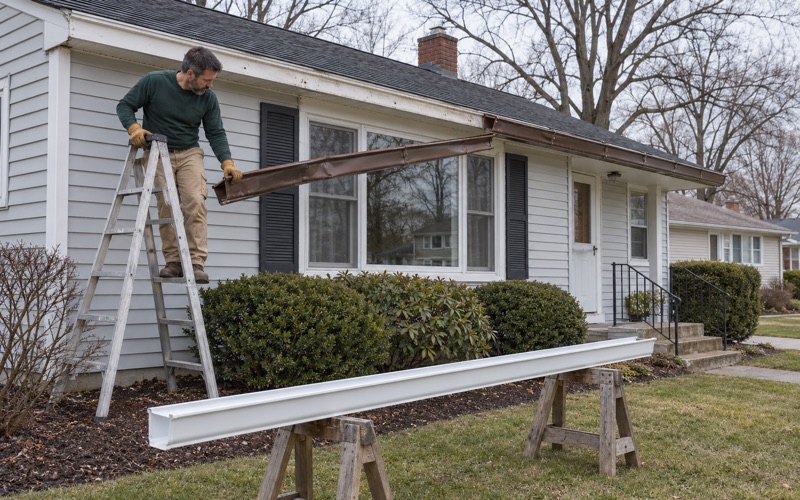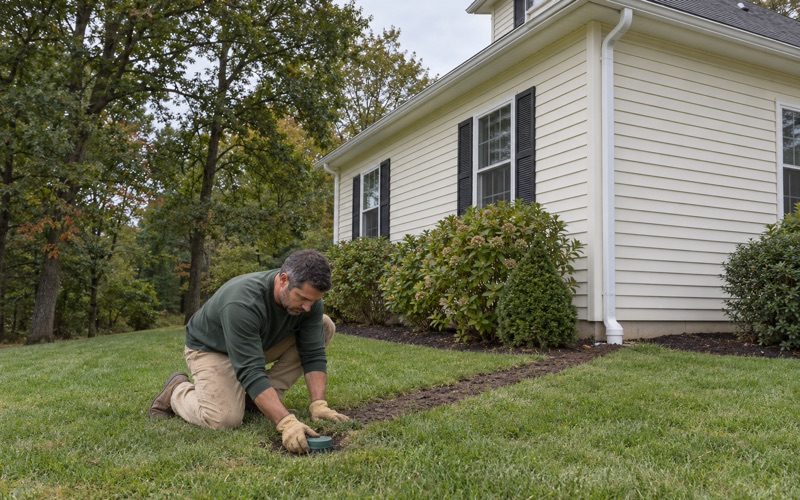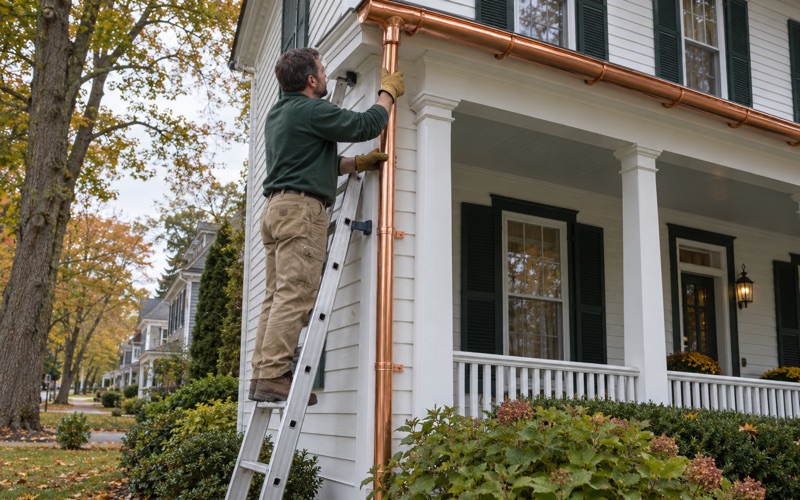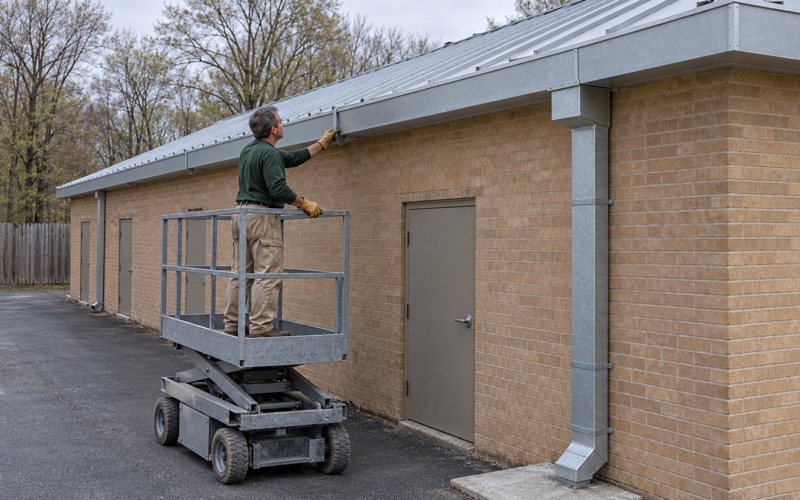
Middletown Quality Gutters installs, repairs and cleans gutters in Metuchen, with more than 20 years of experience behind every run we hang. Much of our work here sits on older houses, where a gutter that has overflowed for several seasons has already damaged the painted board behind it. Replacing the gutter without dealing with that board only moves the problem out of sight.
For landlords, that board carries extra weight. Peeling fascia on a rental is deteriorated paint on a building the owner is responsible for keeping up, and paint that flakes because water has been sheeting over it is the kind of condition owners want settled before a new tenant moves in. We plan gutter and fascia work with that calendar in mind.
This page covers how we approach gutters on rentals and owner-occupied homes alike: why the fascia comes first, how we size and form new seamless runs, how we handle old painted boards when they come off, and how to schedule the job so it lands ahead of a turnover rather than in the middle of one.
Gutters on Metuchen Rentals and the Lead Inspection Cycle
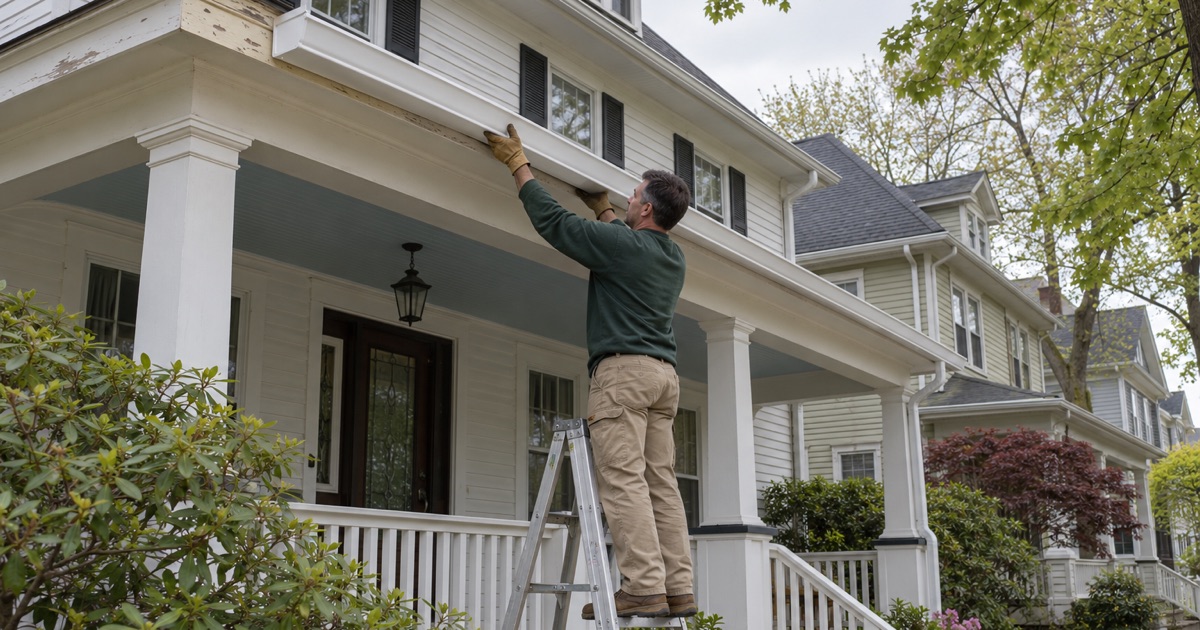
Metuchen is a borough where the rental question comes up on a lot of driveways. The 2024 American Community Survey puts 25.4% of occupied units as renter-occupied, and 72.3% of the borough’s housing units were built before 1980. That combination means many landlords own a house old enough to carry lead-based paint, and the borough has set its own schedule for checking it.
Ordinance 2024-18 and the Schedule It Sets
On September 9, 2024, the Borough Council adopted Ordinance 2024-18 by a 6-0 vote, adding an article titled Lead Based Paint Inspections to the borough code. It applies to the owner, landlord or agent of every single-family, two-family or multiple dwelling unit offered for rent, and it works under the state’s lead-safe rental law rather than replacing it.
The schedule is what matters for planning. After the initial inspection, a rental unit is inspected every three years or at tenant turnover, whichever comes earlier. A unit holding a valid lead-safe certification, which lasts two years, skips the turnover inspection. In practice, a landlord with frequent turnovers sees the inspection come around far more often than once every three years.
A Visual Check of Painted Surfaces
Section 8A of the ordinance explains why the inspection here is visual. The state Department of Community Affairs identified Metuchen as a municipality where under 3% of tested children six and younger had an elevated blood lead level. So the inspector looks for deteriorated paint, dust, debris or residue on painted building components, especially walls, windows, trim and surfaces that see friction or impact.
The ordinance does not mention gutters or fascia by name, and the text we read does not say whether exterior trim is part of the visual assessment. What it does say is that painted trim is a named concern. A landlord who wants no ambiguity about flaking paint on the house tends to deal with peeling fascia before the inspection date rather than after it.
Which Units the Rule Leaves Out
Not every rental falls under the ordinance. Units constructed during or after 1978 are exempt, as are units certified free of lead-based paint, single- and two-family seasonal rentals rented under six months a year, and some older multiple dwellings with a long, clean registration record with the state. Owner-occupied homes that are not offered for rent are outside it entirely.
For our scheduling, the build date is the first question we ask a landlord. A house from the 1950s or 1960s, the two decades that account for the largest share of Metuchen’s housing, sits squarely inside the rule. A newer rental does not, and gutter work on it can be planned around the tenant rather than around an inspection.
Looking for gutters closer to Clark? See Gutters Services in Clark.
Peeling Fascia Behind a Failing Gutter
The fascia is the painted board the gutter is fastened to, and on most older houses it is wood. A gutter that pitches the wrong way, leaks at a seam or clogs at the outlet sends water over its back edge and down the face of that board. Paint fails first, then the wood underneath softens, and both show up from the sidewalk.
How Overflow Damages Painted Trim
Water behind a gutter rarely announces itself during a storm. It shows up afterward as blistered paint along the fascia, staining under the gutter line, and peeling at the rake boards where the roof edge turns. Gutters that have pulled away from the house leave a gap where every heavy rain runs straight down the board instead of into the trough.
On a rental, these spots tend to be noticed late because the owner is not living under them. We look along the full length of each run, including corners where miters were caulked years ago, since a failed corner seam is one of the most common reasons a single section of trim peels while the rest of the house looks fine.
Checking the Fascia Before New Gutters Go Up
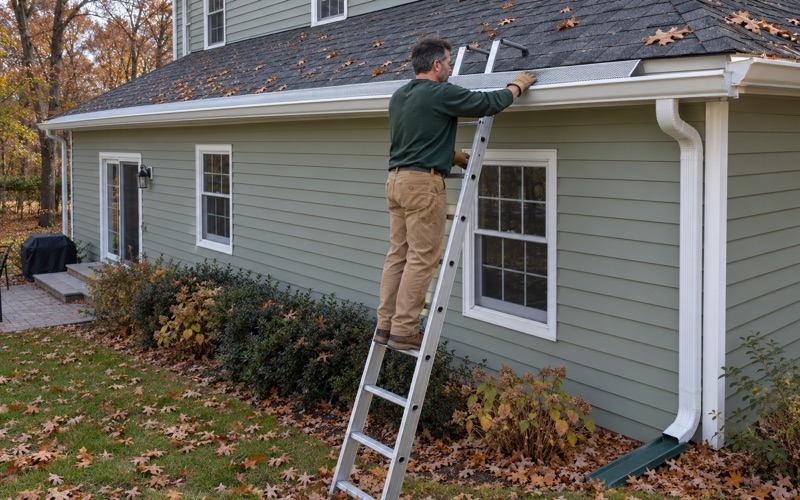
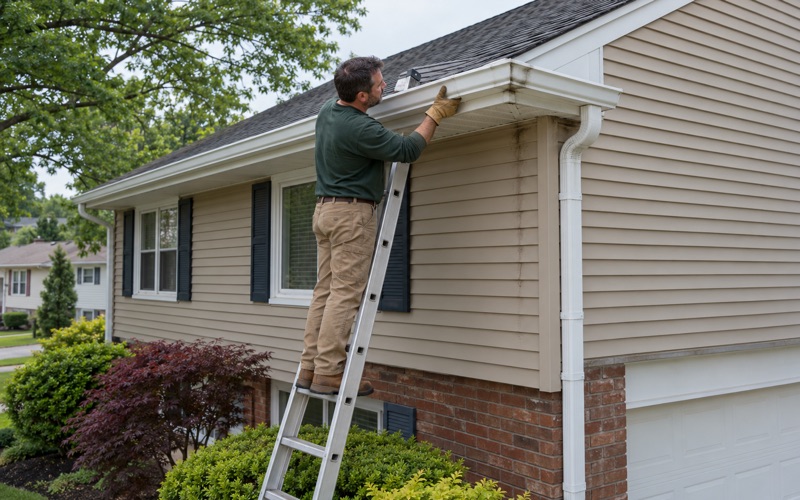
Before any new gutter is hung, we check the fascia behind it for rot. Soft wood is shown to the owner, either in person or in photos, before we replace it, so the landlord sees exactly what is being cut out and why. Hanging a new seamless gutter on a rotted board means the hangers lose their grip within a few seasons.
Where the fascia is sound but the paint has failed, the board can often stay, and the job becomes a question of how the painted surface is handled once the old gutter is off. That distinction affects the estimate, the schedule and the lead-safe practices on site, so we settle it before quoting rather than discovering it halfway through the job.
Sizing and Forming the Replacement Run
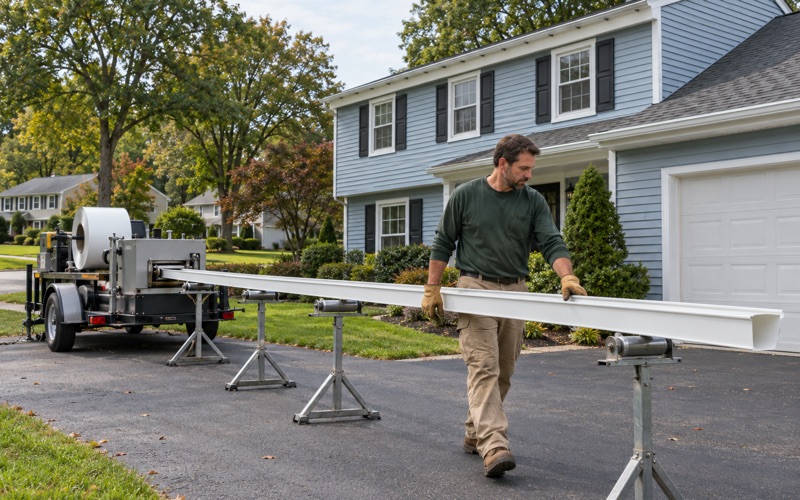
We size gutters and downspouts for the roof area that drains into each run, not by habit. On many houses that points to 6-inch K-style seamless gutters with 3x4 downspouts, formed on site from .032 aluminum coil as one piece per run. Fewer seams mean fewer places for water to escape behind the gutter and back onto the fascia.
Hangers matter as much as size. Hidden hangers screwed into solid fascia hold pitch better over time than spike and ferrule fastening, which loosens as wood shrinks and swells. Corners are joined with box or strip miters and sealed with tripolymer gutter sealant, and a gutter apron or drip edge keeps roof runoff from slipping behind the trough.
Lead-Safe Work When Trim Comes Off
Replacing gutters and fascia on a house built before 1978 means disturbing exterior painted surfaces that may contain lead. That work falls under the federal Renovation, Repair and Painting rule, the EPA regulation at 40 CFR 745, once the disturbed area crosses its threshold. The point for a landlord is simple: the job that fixes peeling trim should not leave paint chips behind.
Containing Paint Chips at the Eave
When old gutters and boards come off, we lay protective sheeting below the work area and keep removed fascia, gutter sections and scraped debris contained rather than letting them fall into beds and lawns. Painted boards are bagged and carried away with the old gutters. That keeps the yard clear for the tenant and avoids leaving behind the kind of paint debris the ordinance treats as a hazard.
We do not test paint, and nothing on this page should be read as a finding that any particular board carries lead. On an older rental we simply treat painted trim as if it might, which is the cautious assumption the federal rule expects. Testing and the borough inspection itself remain separate from our gutter work.
Debris, Leaves and the Curb
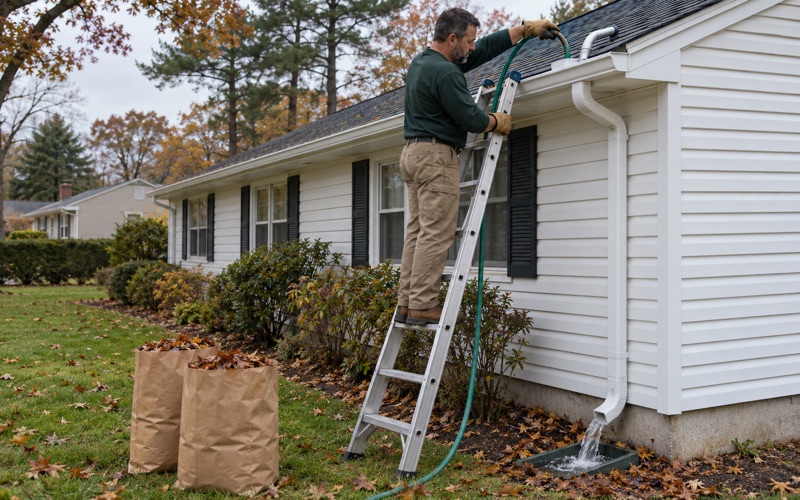
Cleanup in Metuchen follows the borough’s own rules. The Department of Public Works requires leaves at the curb in biodegradable bags only, never raked into the street, because heavy rain can wash loose leaves into storm inlets. Our cleaning visits flush every downspout and bag the debris, so nothing from the gutters ends up on the lawn or loose at the curb.
The borough no longer hands out leaf bags, so residents and landlords buy their own. Because we carry ours off with us, a tenant is not left with a pile of wet gutter debris to deal with after the crew leaves. Before-and-after photos from every cleaning and repair give an absentee owner a record of what the gutters looked like that day.
Permits and Where the Water Goes
The state Uniform Construction Code classes repairing, replacing or installing exterior gutters and leaders as ordinary maintenance. Questions about larger exterior changes go to the Metuchen Construction Code Enforcement Office at Borough Hall, 500 Main Street, and the borough notes that zoning approval may also be required for some projects, so we confirm the scope before work begins.
Where downspouts land matters too. We follow each downspout to its discharge point and propose an extension, pop-up emitter or drywell when the water lands against the foundation. Leader outlets are never tied into the sanitary sewer, and every estimate states where each one will discharge, so the landlord knows the plan before the crew arrives.
Scheduling Gutter Work Around a Tenant Turnover
The cleanest time to replace gutters and fascia on a rental is the gap between one tenant leaving and the next moving in. The house is empty, access to every side is easy, and peeling trim is dealt with before the turnover inspection rather than left flaking while it takes place. Planning that window takes a little working backward.
Working Back From the Inspection Date
For multiple dwelling units, the ordinance requires the landlord to give the Borough Code Official written notice at least 20 calendar days before a scheduled tenant turnover, and the borough performs inspections within 20 calendar days of a request. A unit that cannot be accessed counts as a failed inspection. Those dates define the window a gutter crew has to fit inside.
We ask landlords for the move-out date and any inspection date already set, then book the fascia check and gutter replacement early enough that sealant has cured and replacement boards are in place well before the inspector arrives. Seamless runs are formed on site the same day, so the main constraint is usually carpentry on the fascia rather than waiting on material.
Two-Family Houses and Multiple Dwellings
In a building with two or more units, a lead-based paint hazard found in one unit sends the inspector to the remaining units. For a landlord with a two-family house, that makes it sensible to treat peeling paint on the whole building as one job, since the fascia and gutters run across the entire structure rather than belonging to one apartment.
Fees add up when an inspection has to be repeated. Metuchen charges a $30 filing fee and $300 for each initial visual inspection, with reinspections at $200 and an added $20 per unit for the state fund. Settling peeling paint and failing gutters ahead of the first visit is one way a landlord keeps from paying for a second.
An Estimate a Landlord Can Use
Our estimates list new gutters and repair work on separate lines, because New Jersey taxes them differently: new gutters are an exempt capital improvement, while repairs are taxable. For a landlord tracking expenses on a rental, that split is useful at tax time. The estimate also notes any fascia replacement and the discharge point for every downspout.
Guards are matched to the trees on the lot, since oak leaves and maple seeds call for a different screen than pine needles, and stainless steel micro-mesh is an option where a heavy canopy overhangs the roof. On a rental, a guard that fits the lot means fewer overflow seasons between visits and less water running down freshly repaired trim.
- 20+ Years on Gutters
- Seamless, Formed On Site
- Before-and-After Photos