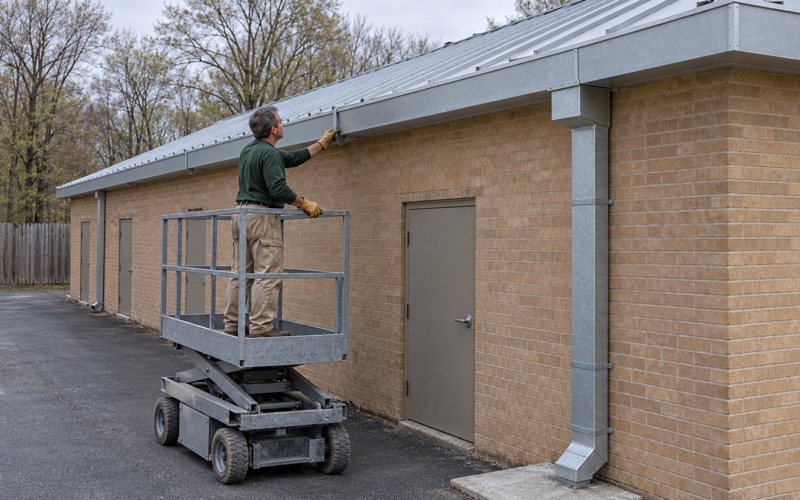
Middletown Quality Gutters has spent more than 20 years on gutters, and in New Providence the part of the job we weigh most carefully is the end of each leader, where a roof’s water finally lands. A new run of gutter is only half of the system. The other half is a decision about where the water from a whole roof plane goes during a hard storm, and that decision is too often made by default.
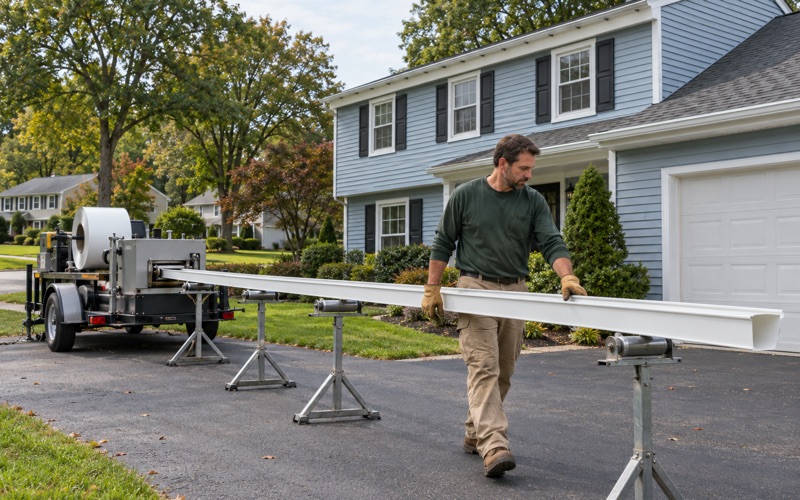
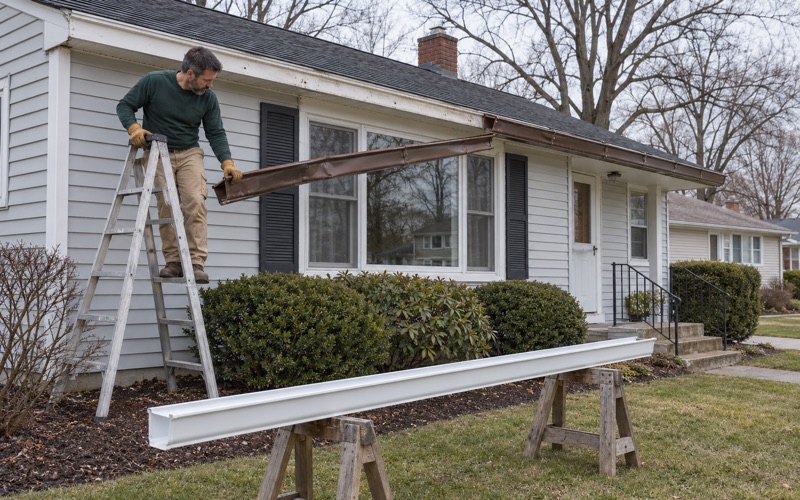
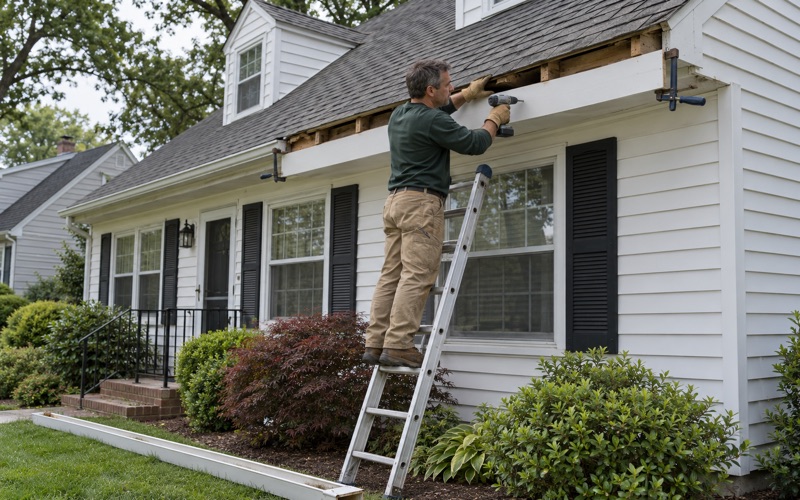
Our crews form seamless gutters on site from coil, one continuous piece for each run, and size both the gutter and its downspouts to the roof area that actually drains into that run. Before anything is hung, we check the fascia board behind it for rot and show the owner any soft wood before we replace it.
The estimate then lists each leader and where it will discharge, with new gutters and repair work written on separate lines because New Jersey taxes them differently. If a discharge point would change how water leaves the lot, we say so on paper first, so any conversation with the borough happens before the work rather than after it.
Gutter Replacement or Drainage Work: What the Borough Reviews
The Borough’s Review Rule
New Providence handles small projects differently from many New Jersey towns. The Building Department, which works out of 360 Elkwood Avenue, states that all improvements require zoning and engineering review before the work begins, even if the project is exempt from construction permit requirements. In plain terms, a state exemption does not settle the question here on its own.
The department lists zoning permits for sheds, fences, patios, driveways and retaining walls, and its residential application asks about wetlands, flood zones and easements. Gutters, leaders and drainage are not named on that page at all, so we do not assume an answer either way. We treat the rule as a reason to check, not as a reason to guess.
Re-Hanging Gutters Versus Moving the Water
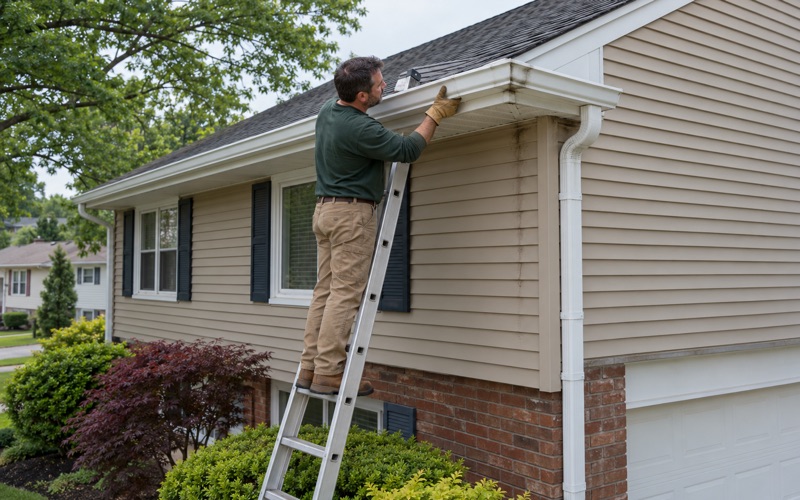
Under the state construction code, replacing or installing exterior gutters and leaders is ordinary maintenance that needs no construction permit. Taking down a sagging run and hanging a seamless 6-inch K-style replacement along the same eave is that kind of job. Whether the borough counts it as an improvement for its own engineering review is something we confirm rather than assume.
Changing where the water goes is a different category of work. Burying leaders and running them out to the curb, adding a drywell, or regrading a side yard alters how a lot sheds its runoff, and that is the kind of change an engineering review exists to look at. When a proposal moves into that territory, we flag it on the estimate and recommend raising it with the borough first.
Calling the Building Department First
The department answers at 908-665-1098, Monday through Friday, 8:00 a.m. to 4:00 p.m., and Keith J. Lynch is the Construction Official. A short call before the crew arrives is far simpler than undoing a buried line afterward. We are glad to describe the planned discharge points in writing so the owner can ask a precise question and get a precise answer.
Looking for gutters closer to Ridgefield? See Ridgefield Gutters.
Salt Brook, the Passaic River and the Irene Outfalls
Most of the Borough Drains Through Salt Brook
Salt Brook starts in Summit, winds through New Providence and joins the Passaic River, and most of the borough drains to the Passaic by way of that brook. The river itself forms the county line on the northwestern edge of town, separating Union County from Chatham Township in Morris County. Water that leaves a roof here is, sooner or later, Salt Brook water.
The brook already floods occasionally in parts of New Providence. Its lower reach backs up when the Passaic floods, while the upper reach and its tributaries flood from inadequate interior drainage. The Clearwater Detention Dam on the brook within the borough is described as one of three high hazard dams in the area, and the borough ranks erosion as a high hazard.
What Hurricane Irene Did at the Outfalls
The borough’s storm outfalls into the Passaic River wetland showed what fast water can do. According to the engineering firm’s project page, during Hurricane Irene the high velocity of uncontrolled stormwater caused accelerated erosion that carved out ravines 20 to 30 feet wide and 10 to 15 feet deep. Those channels began to affect interior roadways and residential properties.
They also cut across walking trails in the Passaic River Parkway, a recreational greenway along the river. The borough obtained a FEMA Federal Assistance Grant and a General Permit 11 to reconstruct the outfalls in the wetland, along with a soil conservation district certification to repair the two worst of them. It was a public repair to a public drainage system.
Why We Keep Roof Water on the Lot Where We Can
Nothing in that account blames houses or roofs, and we do not either. The point is simpler: a leader piped to the street sends its water into the same storm system that drains toward those outfalls. Where a lot can absorb the runoff safely, through an extension or a pop-up emitter well away from the house, we generally prefer that to adding another pipe to the street.
Leader outlets never go into the sanitary sewer on our jobs, and every estimate names the discharge point for each one. That gives the owner, and the borough if the owner asks, a clear picture of where a given roof’s water will end up before a single hanger goes in.
Leaders on 1950s and 1960s Lots
A Postwar Housing Stock
New Providence grew quickly after the war, from 3,380 residents during 1950 to 13,796 by 1970. Census estimates place 52.4% of the borough’s housing units in buildings from 1950 through 1969, and 64.4% of all units are detached houses. Of 5,351 occupied homes, 3,568 are owner-occupied detached houses, which is where most gutter work here happens.
Those houses lost their first gutters long ago. What usually survives is the drainage layout: leaders that end where the original builder put them, on lots laid out before modern stormwater rules. A properly sized new gutter catches more of the roof’s water than a sagging old one, and it can deliver that water faster to the same tired spot.
Following Each Downspout to Its End
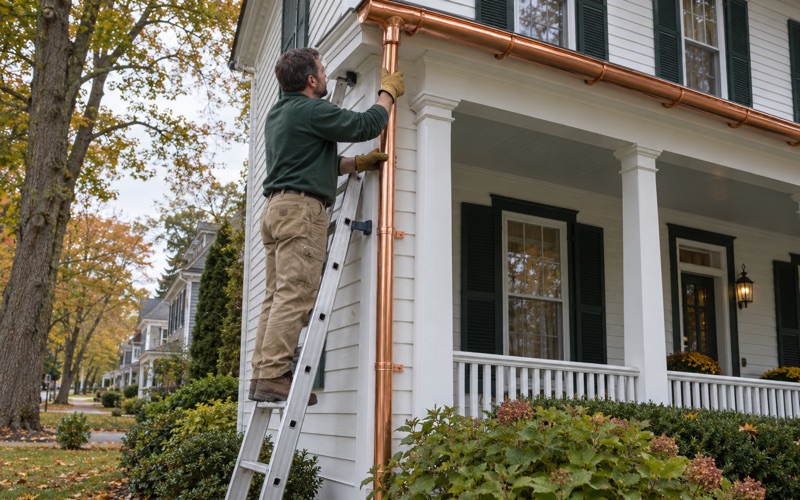
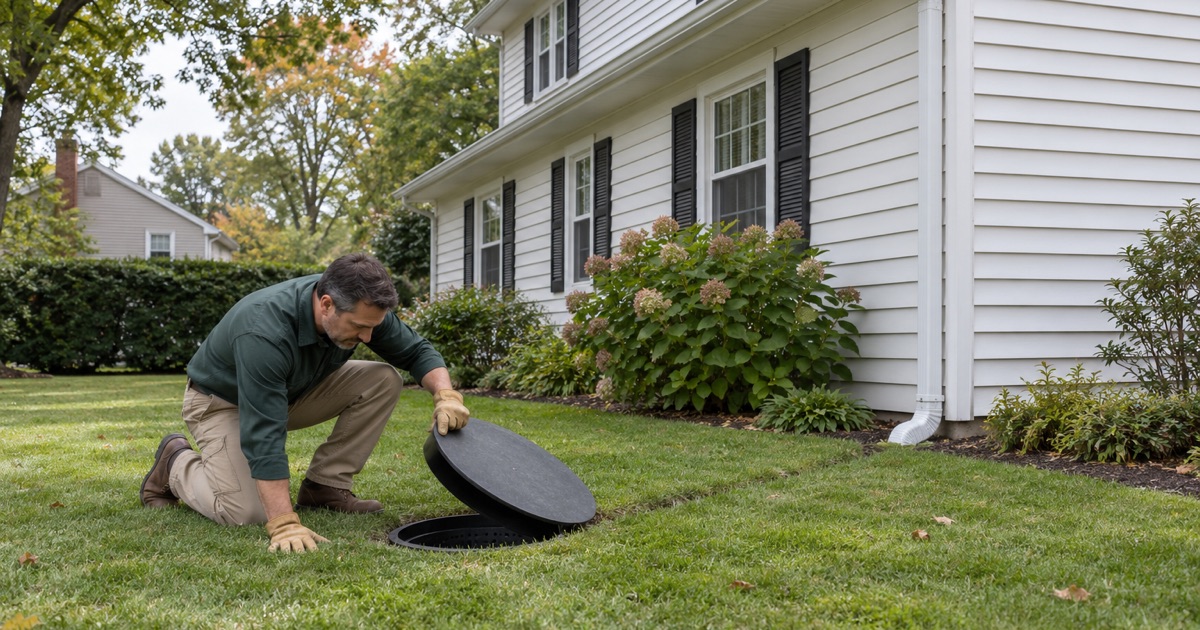
On every New Providence job we walk each downspout down to where its water lands. A leader that drops against the foundation, into a cracked splash block or into a buried line nobody can trace gets noted with a photo. The state residential code calls for the grade to fall 6 inches within the first 10 feet from the foundation, and we check whether the ground near each outlet still does.
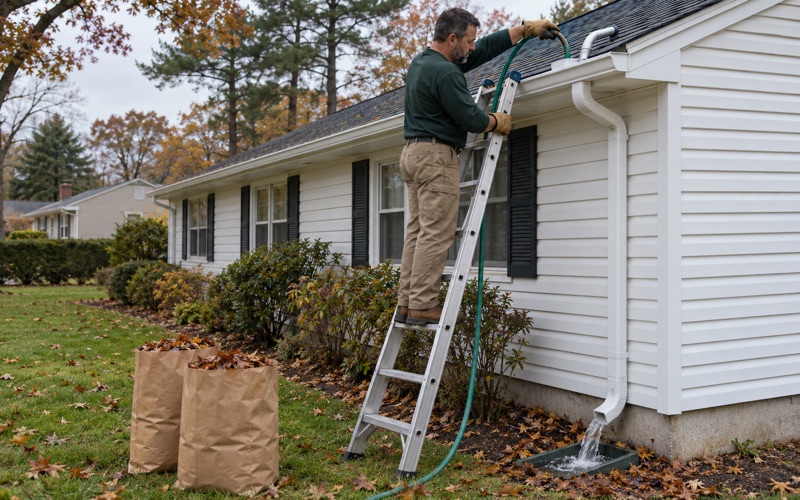
Buried lines from that era deserve particular suspicion. Older pipe can crush or fill with roots, and a blocked underground leader backs water up into the gutter until it spills over the front edge. We run water through any line we plan to rely on before connecting new downspouts to it.
Extensions, Emitters and Drywells
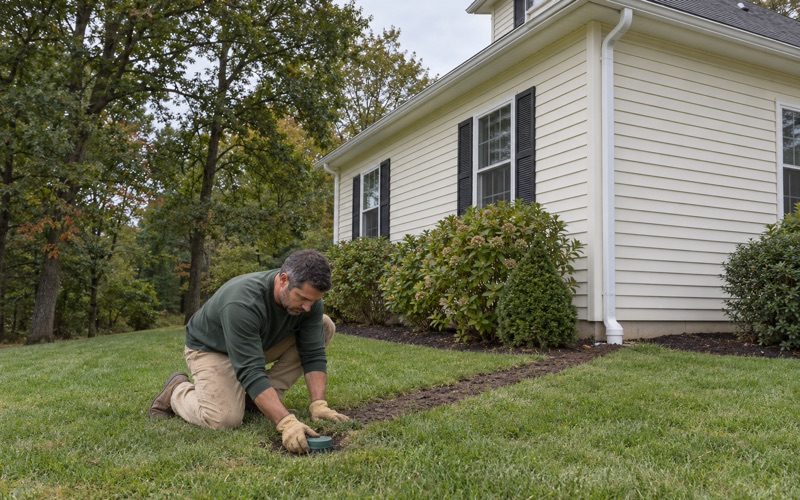
When an outlet lands against the house, we propose a fix scaled to the lot. A simple extension often does it. A pop-up emitter at the end of a short underground run suits a tighter yard, and a drywell is an option where the soil and water table allow; the state stormwater rule keeps a drywell 2 feet above the seasonal high water table.
The larger of those options change how a lot handles runoff, which is why we list them on the estimate as separate items with the reason for each. The owner can then take that plan to the Building Department and ask whether it calls for engineering review before anyone digs.
Trees, Townhouses and Apartment Buildings
Pruning Limbs Clear of the Gutter Line
Where limbs hang over a roof, cutting them back is part of keeping a gutter clear. The borough’s tree law, Ordinance 2024-07, requires an approved permit to remove any tree over 4 inches in diameter, but it states that removal does not include responsible pruning and maintenance of a tree. Cutting branches back from a gutter line is pruning, not removal.
The same ordinance asks something of contractors, too. Whoever is erecting, altering or repairing a structure must guard nearby trees against injury, and the Construction Official is among those who enforce it. Our crews stage ladders and materials away from trunks, and we leave any tree that would need a removal permit to the owner and the borough.
Guards Matched to What Falls on the Roof
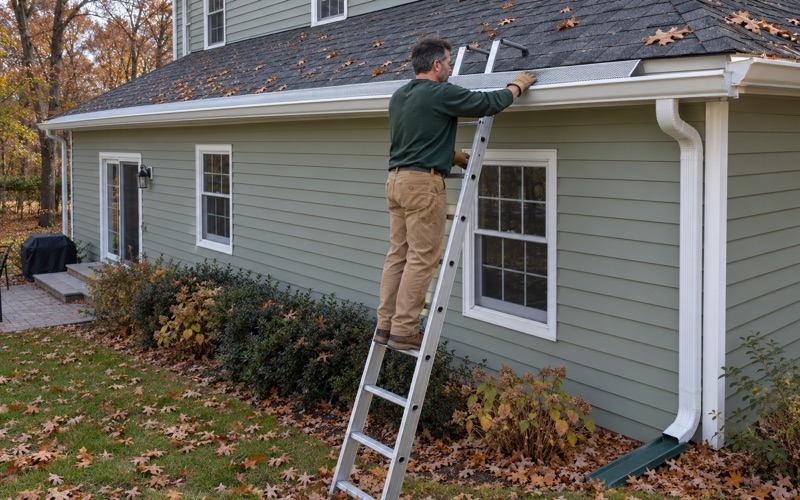
Once the limbs are back, we match any guard to the trees on that particular lot. Pine needles slip through screens that easily stop oak leaves, so a needle-heavy roof usually calls for stainless steel micro-mesh, while broad leaves can be handled by a coarser screen. Our cleaning visits flush every downspout, bag the debris and come with before-and-after photos.
Townhouses and Associations
Not every home here is a detached house. A listing for one Murray Hill Square townhouse, built during 1983, shows a monthly association fee of $786 that covers exterior maintenance. In a community like that, we check the master deed or the management office first, so the owner knows whether the gutters are theirs to fix or the association’s.
Apartment Buildings
Renting in New Providence mostly means an apartment building: 1,030 of 1,297 renter-occupied units are in buildings of three or more units. The largest example is New Providence Gardens, a 232-unit garden-style complex built during 1951. On buildings like these, the gutters are the owner’s responsibility, not the tenants’.
Multiple dwellings of three or more units fall under the state Bureau of Housing Inspection, which inspects them on a five-year cycle, and the state maintenance code requires leaders and drainpipes kept fastened, leak-free and clear. For building owners, we size each run to the larger roof areas these buildings carry and route every leader where the site can take the water.
- 20+ Years on Gutters
- Seamless, Formed On Site
- Before-and-After Photos