Middletown Quality Gutters has spent more than 20 years working on gutters in Point Pleasant and along the shore, and this past winter gave the borough’s eaves a hard test. Our work here this year comes down to one question: what did a heavy, wet blizzard leave behind along the gutter line? Hangers, seams, outlets and the fascia board behind them all carried that weight.
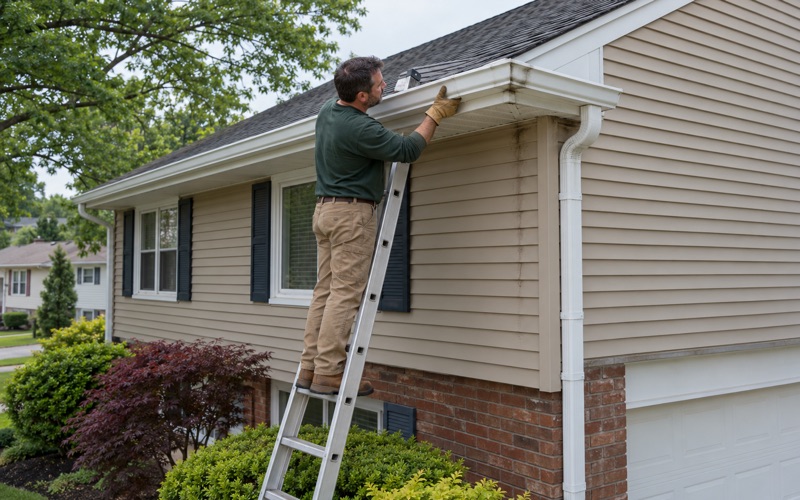
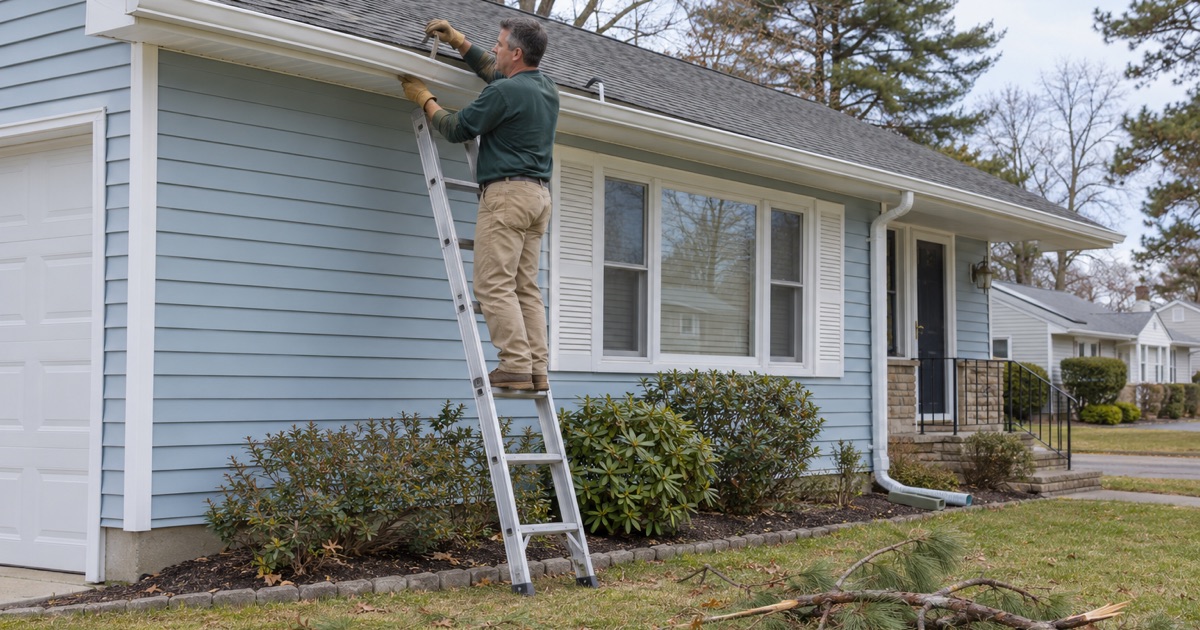
Every visit starts with a walk around the house, looking at each run from the ground and then from the ladder. A sagging section, a gutter that has rolled forward on its hangers, or a corner miter weeping at the seam usually tells the story before we touch anything. We photograph what we find and show the owner before any price is written.
Our aim for the borough this spring is simple: find what the winter loosened before the spring rains find it. That means checking the troughs, the hangers, the fascia and every downspout outlet, then fixing whatever moved before water starts running down the siding or pooling against the foundation.
Gutters After Point Pleasant’s February 2026 Blizzard
What the Weather Service Confirmed
The Mount Holly office of the National Weather Service published a preliminary summary of the February 22-23, 2026 storm, and it lists blizzard conditions as preliminarily confirmed for the Coastal Ocean forecast zone, the zone that holds the borough. That status stays preliminary until it is certified, so we describe it the way the Weather Service does rather than ranking it against other winters.
The criterion behind the word blizzard is specific: sustained winds or frequent gusts of 35 mph, with falling or blowing snow cutting visibility below a quarter mile for three hours or more. Wind like that drives snow into open gutter troughs and packs it against the roof edge, which is why a blizzard asks more of a gutter than a calm snowfall of the same depth.
What Fell on the Borough
Patch reported that the storm dropped more than 12 inches of snow on Point Pleasant, citing borough schools and officials. More than 1,000 homes and businesses in the borough were still without power that Monday night, and police warned of downed trees, downed and low-hanging power lines, and deep, drifting snow.
No report we have seen describes gutter or roof damage from this storm, so we do not assume a house was hurt, and we do not assume it came through clean either. A gutter can look straight from the street while three hangers behind it have let go, and the first hard spring rain is often when that finally shows. Checking now costs less than finding out from a wet basement wall.
Looking for gutters closer to Millstone Township? See Millstone Township Gutters.
Snow Load, Ice and the Hangers That Hold the Run
How Wet Snow Loads a Gutter
A gutter is built to carry water for a few minutes at a time, not to hold a packed trough of wet snow for days. When snow fills the gutter and more slides down from the roof above it, the weight lands on the hangers and on the screws or spikes that fasten them into the fascia. Every hanger along the run shares that load until one gives.
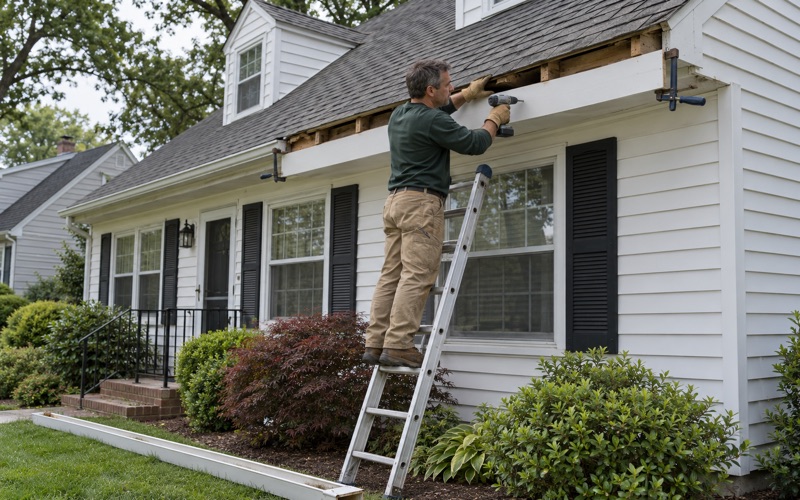
Once one hanger lets go, its neighbors pick up the difference, and a sag starts. On older installations held with spike and ferrule, the spikes can work partway out of the board under that pull. Hidden hangers screwed through into the fascia hold the run more securely, which is one reason we use them on every new gutter we hang.
Ice at the Eaves When Melting Starts
After a coastal blizzard, roof snow melts in the daytime sun and refreezes at the colder eave overnight. Meltwater that reaches a gutter already full of slush freezes there, and ice can build back up the roof edge and spread through the trough. Water expands as it freezes, which strains end caps, outlets and the sealed joints at the corners.
We look for gaps at end caps, miters that have separated and outlets pulled away from the bottom of the gutter. A seam that is still sound but weeping gets cleaned, dried and resealed with tripolymer gutter sealant. A sectional gutter whose joints keep opening winter after winter is usually an argument for a seamless replacement instead of another patch.
The Fascia Behind a Sagging Run
A gutter that held water and ice for weeks can also soak the fascia board behind it, especially where the drip edge or gutter apron was missing. Before anything new goes up, we probe that board for soft wood. If we find rot, the owner sees it first, so a fascia replacement is something they have looked at rather than a surprise line on an estimate.
On houses built before 1978, painted fascia and trim may carry lead paint, and the EPA Renovation, Repair and Painting rule governs how that wood is disturbed. Census estimates count 3,454 of the borough’s 8,742 housing units as built between 1950 and 1969, so we plan our fascia work around that rule on a large share of the houses we see here.
Fallen Limbs, Bent Runs and Buried Downspouts
Branches That Came Down With the Snow
The downed trees from that night were not only a street problem. A limb that falls onto a roof edge often lands on the gutter first, and a heavy branch can kink a run, crush the front lip or tear an outlet loose from the downspout below it. A dent that blocks the trough also changes where water goes the next time it rains.
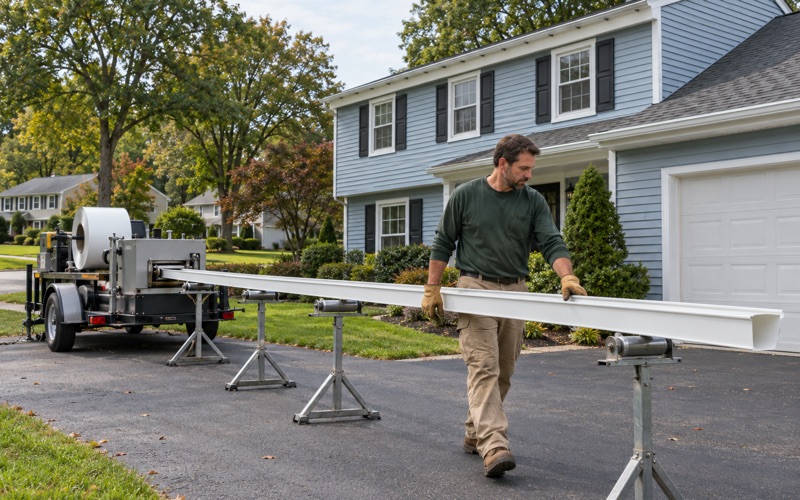
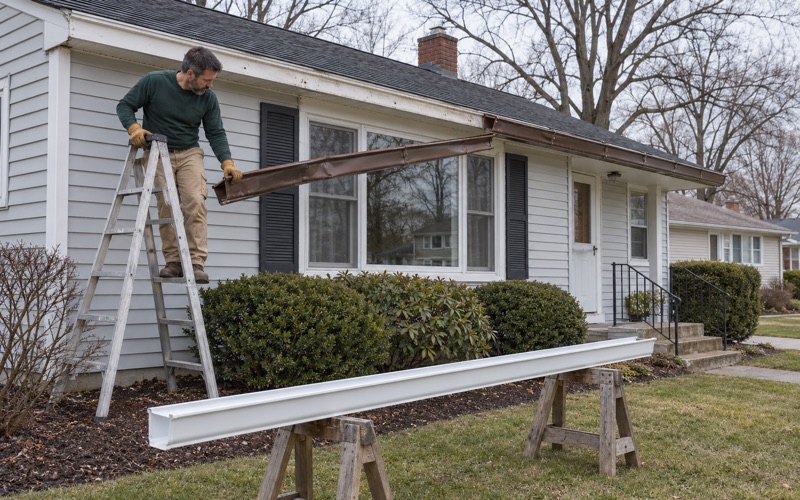
Bent aluminum rarely straightens back to a clean pitch. We replace a crushed section with new seamless gutter formed on site from .032 aluminum coil, cut as one piece for the full length of that side of the house, so there is no new joint sitting where the old one failed. Matching the profile to the rest of the house keeps the repair from standing out.
Trees, Leaves and the Right Guard
Curb Canopy, a data aggregator, models the borough’s tree canopy at 26.3 percent as of February 2026. That is an estimate, not a survey of any one lot, so we look at the trees standing over each roof before recommending a guard. Broken twigs and leaves left behind by a winter storm tend to settle in the troughs and outlets until the first spring rain backs them up.
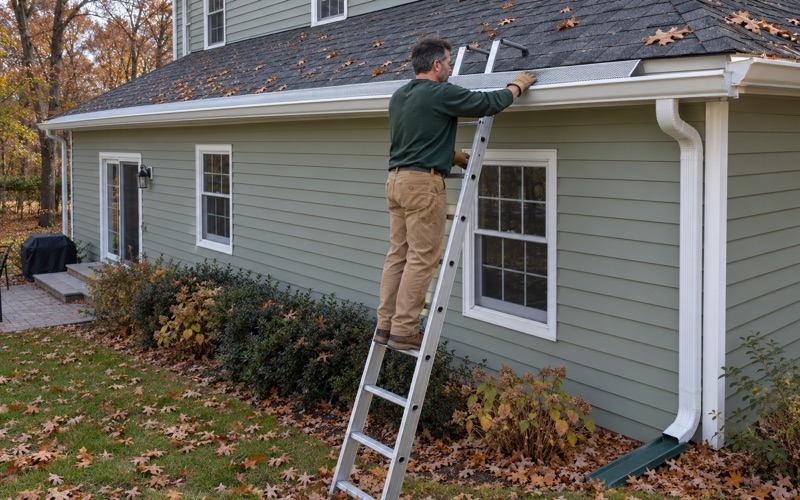
Guards are matched to what actually falls. Pine needles slip through coarse screens while oak leaves mat on top of them, so the choice between stainless steel micro-mesh and other screen types depends on the trees on the lot. After a winter of falling branches, it is also worth checking whether an existing guard was bent, lifted or pushed out of place.
Downspouts Buried at Grade
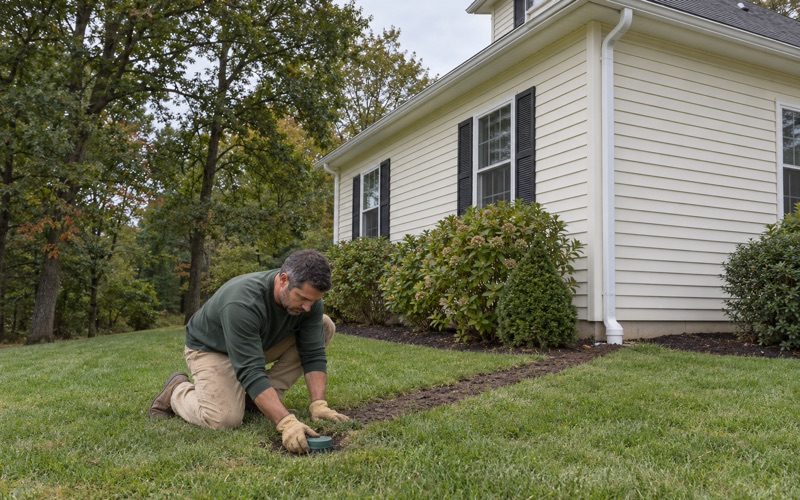
Shoveled and plowed snow often buries the bottom of a downspout, and a snowbank leaning against a leader can crack an elbow or knock an extension loose. Once the snow is gone, we follow each downspout to where its water actually lands. If it discharges against the foundation, we propose an extension, a pop-up emitter or a drywell to carry it farther away.
Where that water goes matters here for another reason. Borough code section 10-16.5c bars connecting roof downspouts to a building sewer that ties into the public sanitary sewer. We never connect a leader outlet to the sanitary line, and every estimate we write states where each downspout on the house will discharge.
A Spring Gutter Check Before the Rains
What the Spring Check Covers
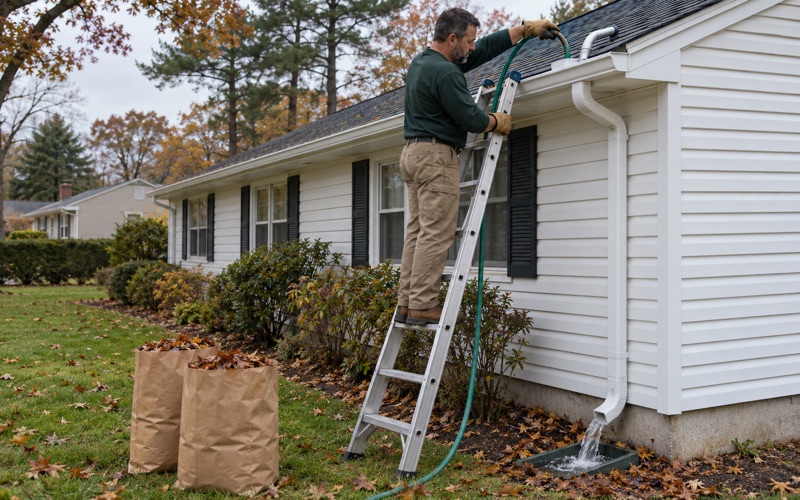
A spring gutter check after a winter like this one covers the whole drainage system, not just the trough. We sight down each run for sags and reverse pitch, look for hangers that have backed out of the fascia, and check every miter, end cap and outlet for gaps. Then we run water through the gutters to see where it pools and where it leaks.
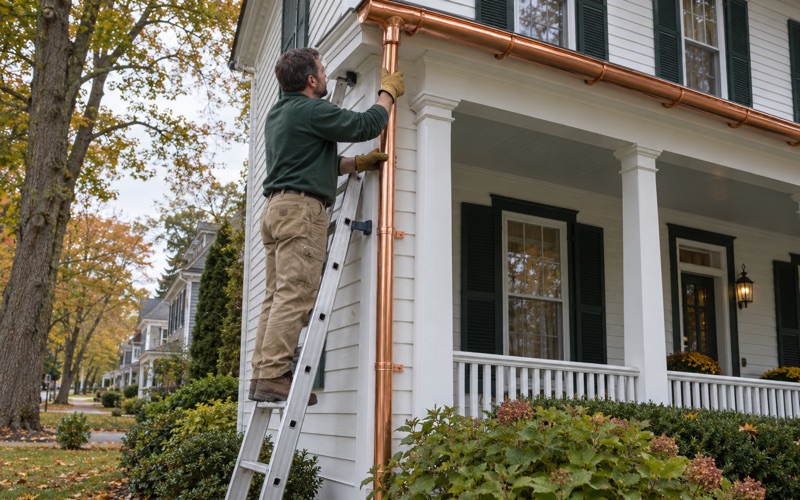
Every downspout gets flushed, and whatever comes out is bagged and hauled away rather than left on the lawn or at the curb. Before-and-after photos come with the visit, so an owner who was not home that day can still see each run and each corner we worked on, and keep them on file.
Repair or Replace
Most spring visits end in repair: rehanging a run at the right pitch, resealing a corner, replacing a crushed elbow. When a run is kinked along its length or the metal has stretched, replacement is usually the better spend. We size new gutters and downspouts to the roof area that drains into each run, which on many houses means 6-inch K-style seamless gutters with 3x4 downspouts.
The New Jersey Division of Taxation treats those two jobs differently. New gutters are an exempt capital improvement documented on Form ST-8, while repairing gutters is a taxable repair. That is why our estimates put new gutters and repair work on separate lines, so an owner can see what the storm cost and what was already due for replacement.
Materials Near the Water
The Manasquan River forms the borough’s northern boundary, and the Point Pleasant Canal divides it in half, so plenty of houses here sit close to the water. When we replace gutters on a house like that, we choose the gutter and fastener materials with the manufacturer’s salt-air warranty terms in mind, so the exposure does not cut short the coverage an owner is counting on.
Insurance and Your Records
The New Jersey Department of Banking and Insurance treats the weight of ice, snow or sleet as a covered peril, though what any single policy pays depends on its terms. If you plan to file a claim, photos taken before any repair carry weight, and a written estimate that separates storm repair from replacement gives an adjuster a clear account of what was found.
- 20+ Years on Gutters
- Seamless, Formed On Site
- Before-and-After Photos