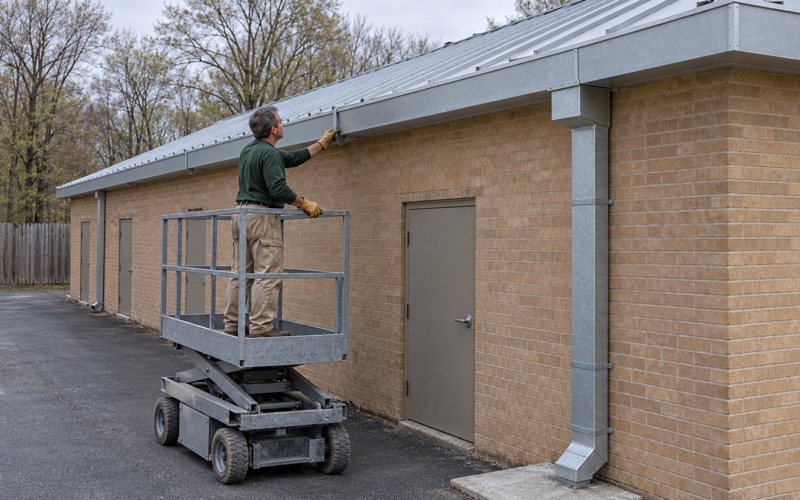
Middletown Quality Gutters has spent more than 20 years installing, repairing and cleaning gutters in Ridgefield and across New Jersey, and every job starts with one question: where does the roof’s water go once it leaves the downspout? We size each gutter and leader for the roof area that drains to it, so a long rear slope never overloads a run picked by habit.
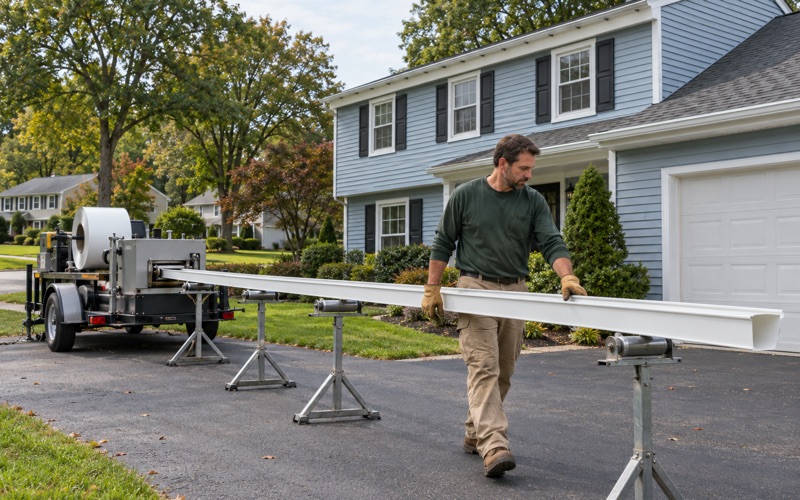
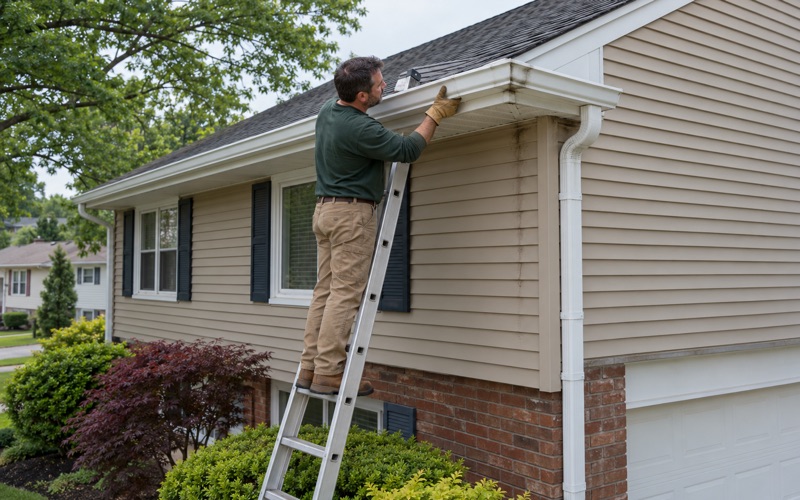
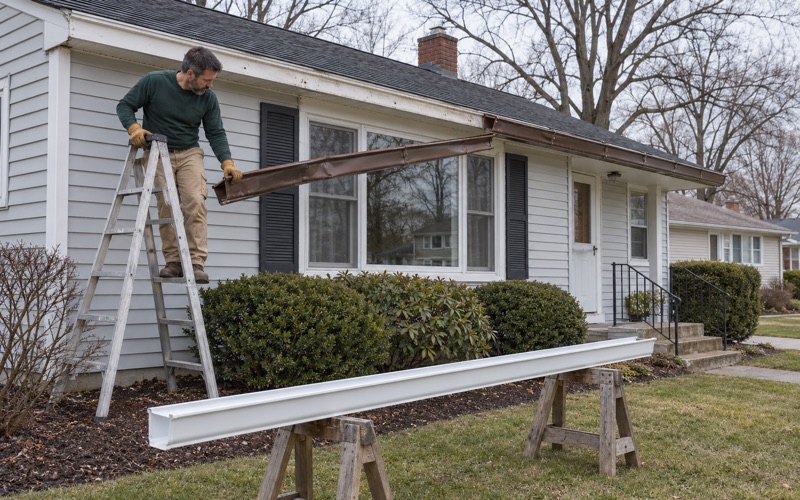
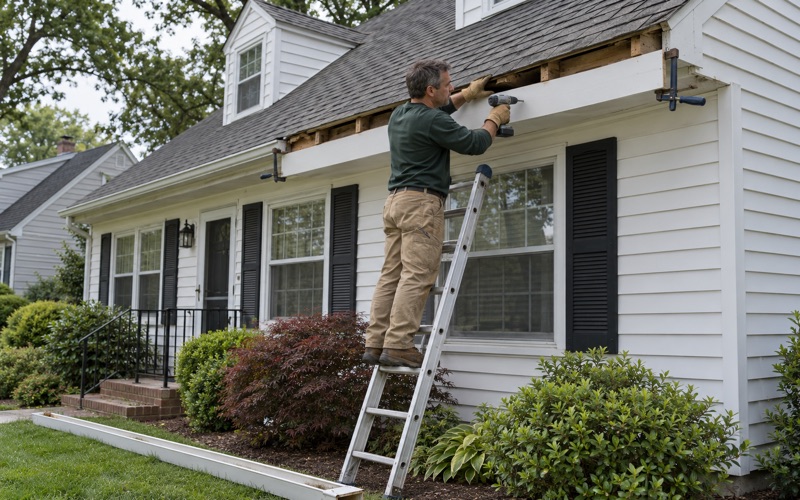
Our seamless gutters are formed on site from coil, one continuous piece for each run of the house, which removes the joints that tend to leak first. Before anything is hung, we check the fascia board behind it for rot and show the owner any soft wood before we replace it. New gutters fastened to a failing board only move the problem.
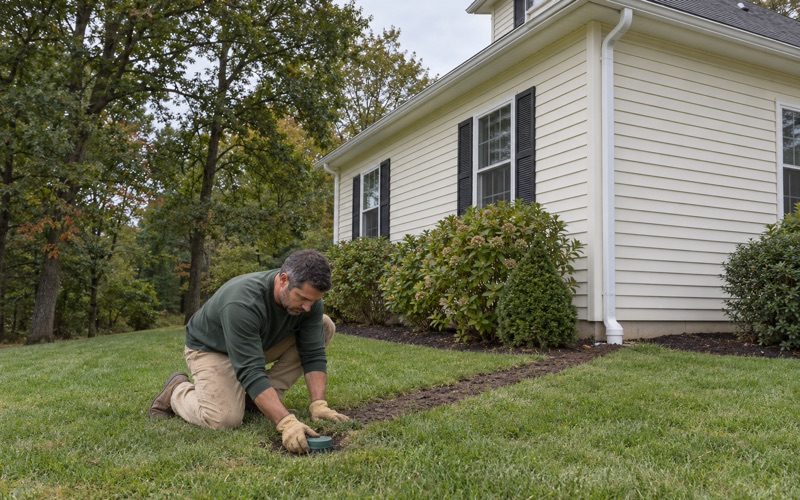
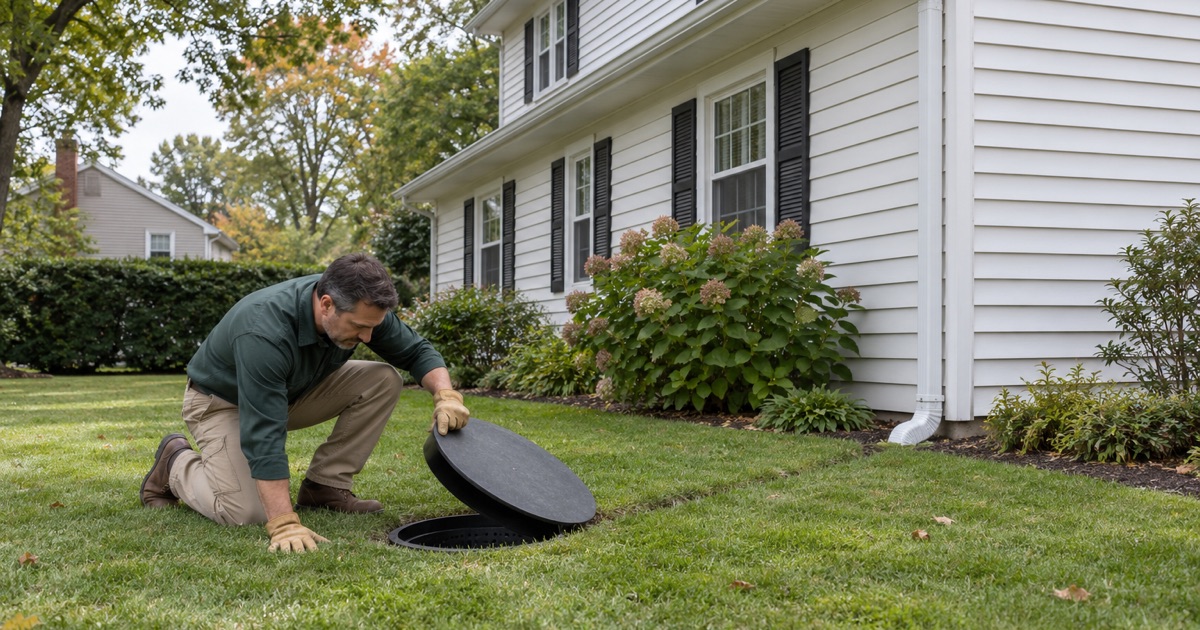
Every downspout we touch gets followed to its landing spot. If the water drops against a foundation wall, the estimate proposes an extension, a pop-up emitter or a dry well, and it names where each leader will discharge. We never tie a leader outlet into the sanitary sewer. In a borough built on a slope, that last step often matters more than the gutter profile.
Gutters from Ridgefield Heights Down to Wolf’s Creek
A Borough Named for Its Slope
Ridgefield takes its name from its terrain. The borough runs from Ridgefield Heights on the Palisades ridge down toward Overpeck Creek, the Skeetkill Creek Marsh and the Meadowlands, and its sections include Morsemere and Grantwood as well as the Heights. That fall is the reason drainage here is never only a single-property question. Water that leaves a roof on the hill keeps moving after it lands.
For a house on the Heights, a downspout that empties onto a driveway or toward the curb sends its water downhill instead of into the yard. Repeat that for every roof on the block and the street turns into a channel during a heavy storm. We look at where each of your leaders lets go, because on a slope the gutter’s job does not end at the bottom elbow.
What the Police Tell Residents About Wolf’s Creek
Wolf’s Creek is the stream the borough watches when heavy rain is forecast. On July 10, 2020, the Ridgefield Police Department posted a Nixle alert warning that flash flooding was possible through the evening, and it asked residents to move vehicles from low areas within the borough, especially along Wolf’s Creek, to higher ground. Flash flood warnings in July 2026 named Ridgefield again.
Those alerts mark where the low ground is, and the low ground is where hillside roof water ends up. We have no record of what any storm did to particular houses, and we will not guess at it. What the alerts do show is that runoff from the upper streets and the creek’s own rise meet in the same places, which shapes how we plan discharge at both ends of town.
The 2025 Wall Project Along the Creek
The creek banks are a borough concern as well. On March 24, 2025, the Mayor and Council awarded Colliers Engineering & Design a contract, not to exceed $80,000, for design, bidding and construction administration services regarding a collapsed masonry wall along Wolf Creek. It is a public project, and it tells homeowners that the creek corridor is something the borough is actively managing.
It is also why we avoid any plan that simply pushes more water toward the creek. A leader line run to the back property edge on a lot near the stream can look tidy, yet it adds volume to a channel the borough is already repairing. We would rather slow and spread roof water where the ground allows it, and we say plainly when the ground does not.
Looking for gutters closer to Guttenberg? See Gutters in Guttenberg.
Dry Wells and Extensions on the Low Ground
Hill Lots: Keep the Water on Your Property
On the Heights and the upper slopes, there is usually more distance between the yard and the creek, so there is more room to work. We favor extensions that carry water clear of the foundation and onto lawn, pop-up emitters fed by underground downspout lines, and dry wells where the soil drains. The aim is to let your yard absorb the water rather than hand it to the street.
Grade matters as much as the pipe. The New Jersey edition of the 2021 International Residential Code, section R401.3, calls for the ground to fall 6 inches within the first 10 feet from the foundation. Where a yard tilts back toward the house, a longer extension alone will not cure it, and we tell you so before quoting hardware that cannot do the job.
Low Lots Near the Overpeck and Wolf’s Creek
Lower in the borough, toward the Overpeck lowland and the streets near Wolf’s Creek, the picture changes. A dry well only works when there is dry soil beneath it to take the water. New Jersey’s stormwater rule, chapter 7:8 of the state’s administrative code, sets dry wells 2 feet above the seasonal high water table, and on low ground that margin can be thin.
When a storm raises the creek, the ground near it can hold water longer, and a buried dry well there may sit full exactly when the roof is sending the most. On those lots we usually lean toward surface solutions: extensions that reach well past the foundation, splash protection and grading corrections. A dry well is proposed only where the conditions at your address support one.
When an Extension Is the Honest Answer
Homeowners sometimes expect a drainage job to end in buried pipe. On a low Ridgefield lot, the better answer is often a plain extension that carries water several feet out and lets it spread across the lawn. It costs less, it can be checked after every storm, and it does not depend on soil that may already be saturated when the creek runs high.
Whatever we propose, the estimate names the discharge point for each leader, so you can see where the water is meant to go. Gutter and leader work counts as ordinary maintenance under the state’s Uniform Construction Code rules at 5:23-2.7(c)1.xvi, but ordinary does not mean careless. The drainage plan is written down before the first section is hung.
Gutters on Ridgefield’s Two-Family Houses
A Borough of Two-Unit Buildings
The two-family house is one of Ridgefield’s defining buildings. Census estimates count 1,209 housing units, or 29.4 percent of the total, in two-unit buildings, and 869 of those units are rented. About 56.1 percent of the borough’s housing stock predates 1960. That means many roofs carry older gutters shared by two households and owned by someone who may live in one unit or neither.
A two-family roof often drains to fewer, longer runs than its size suggests. We size gutters and downspouts to the roof area each run actually serves, which on a large rear slope can mean 6-inch K-style seamless gutters and 3x4 downspouts. Wide-flange outlets help a heavy rain leave the trough instead of spilling over the front edge onto the walk below.
Owners, Tenants and Who Sees the Problem
In a rented two-family house, the person who notices an overflowing gutter is often a tenant, while the person who pays for the repair is the owner. We send before-and-after photos with every cleaning and repair, so an owner who lives elsewhere can see what was done without a separate trip. The photos also give both parties a shared record of the gutters’ condition.
Units covered by Section 322 of the borough code fall under Ridgefield’s rental registration, and owners managing those units tend to want paperwork on file. We cannot speak to what any inspection will ask for, but a dated photo set of the roof drainage is easy to keep with your property records. It comes with our standard visit rather than as an extra charge.
Side Yards, Driveways and Older Fascia
Two-family houses on narrow lots often sit close to the neighbor, with downspouts emptying into a tight side yard or onto a shared driveway. On a slope, that water can run straight to the next property or down to the sidewalk. We look for a discharge point that keeps water on your lot and away from both foundations, and we tell you when no good one exists.
Fascia on these older houses deserves a close look. Painted fascia and trim on houses built before 1978 fall under the EPA Renovation, Repair and Painting rule, 40 CFR 745, so rotted boards are removed with that rule in mind. We show you the soft section before it comes out, so you know exactly what the repair line on your estimate covers.
Cleaning, Repairs and Help Paying for the Work
Cleaning Visits That Leave Nothing Behind
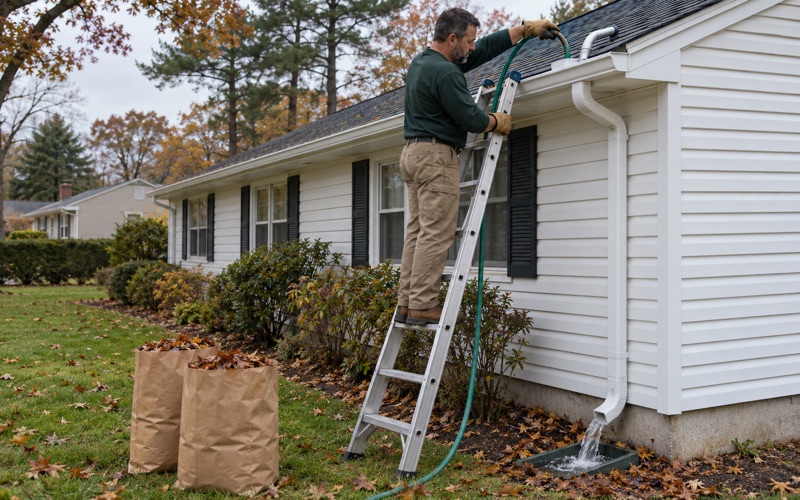
A cleaning visit is more than scooping out the troughs. We flush every downspout to confirm it runs clear to the bottom, and all of the debris is bagged and taken away, so nothing is left on the lawn or at the curb. On a hillside lot that matters, because loose leaves at the curb wash downhill and gather at the same low spots the creek alerts point to.
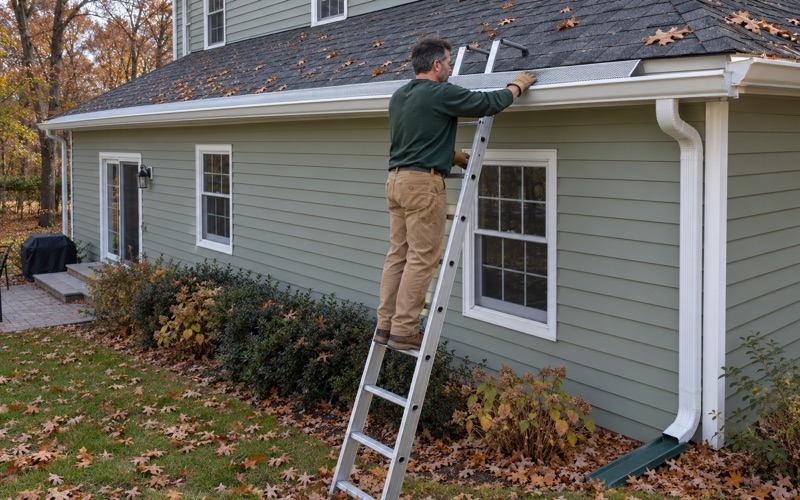
Guards are matched to the trees on your lot rather than picked from a single catalog page. Oak leaves and pine needles behave differently, so a stainless steel micro-mesh screen that suits one yard can be the wrong choice for the next. Where a guard makes sense, we explain which debris it stops and what maintenance it still leaves for you.
Repair or Replace, Itemized Separately
Our estimates put new gutters and repair work on separate lines, because New Jersey taxes them differently. Under the Division of Taxation’s S&U-2 guidance, new gutters are an exempt capital improvement documented on Form ST-8, while repairing existing gutters is a taxable repair. Splitting the two keeps the tax treatment clear for you and for any program that may help with the cost.
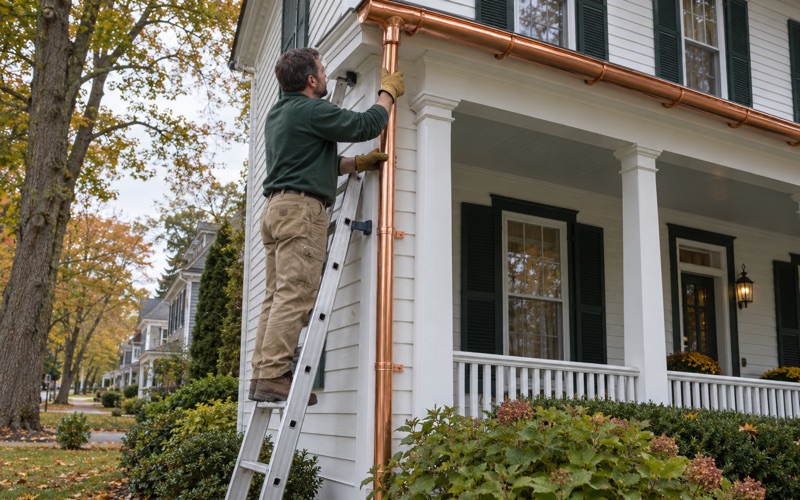
Most Ridgefield homes get .032 aluminum coil with hidden hangers and tripolymer sealant at the miters and end caps. Where the house calls for something more traditional, copper and half-round work is matched to the age and style of the building, including 16-ounce copper that weathers to a patina and half-round gutters with a double-bead profile.
The Borough’s Housing Rehabilitation Program
Some owner-occupants may qualify for help with the cost. Ridgefield’s Housing Rehabilitation Program pre-application describes a $20,000 home improvement loan at 0 percent interest with no monthly payments, repaid when the house is sold or title transfers, and it lists roofs and gutters first among eligible repairs. Single, duplex and three-plus unit homes are covered, and income limits are printed on the form.
The form is undated and lists the program coordinator at 604 Broad Avenue, so call 201-943-5215, extension 381, to confirm the program is funded before planning around it. If you do apply, our itemized estimate gives the coordinator a clear scope to review. Questions about construction or zoning go to the Building Department at 700 Shaler Boulevard, (201) 943-5546.
- 20+ Years on Gutters
- Seamless, Formed On Site
- Before-and-After Photos