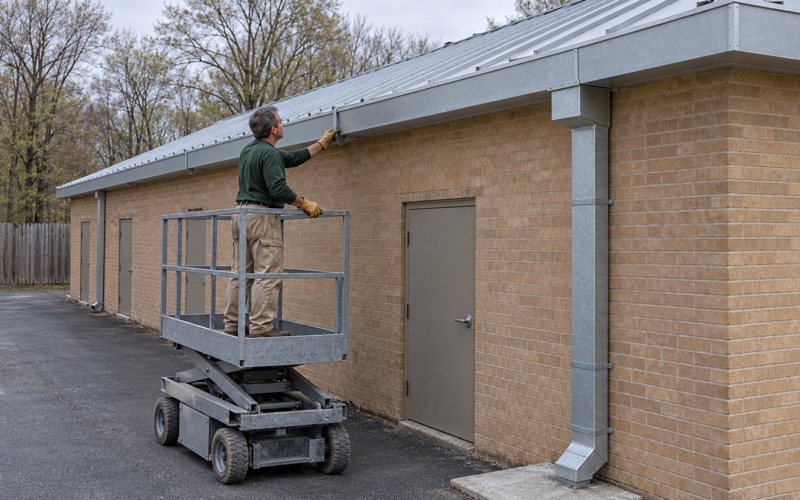
Middletown Quality Gutters brings more than 20 years of experience to gutters in Rutherford, and the work here begins with a question many estimates skip: what is growing between the house and the curb. A borough with protected street trees changes how we set ladders, where we route downspouts and which guards suit a given roof.
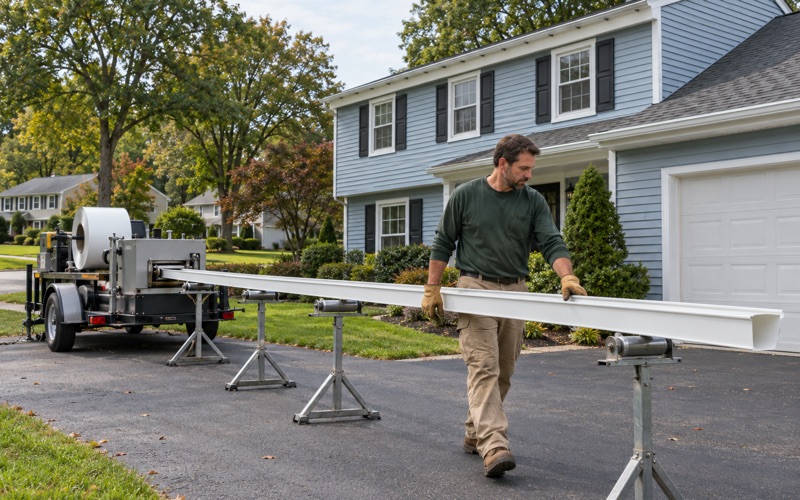
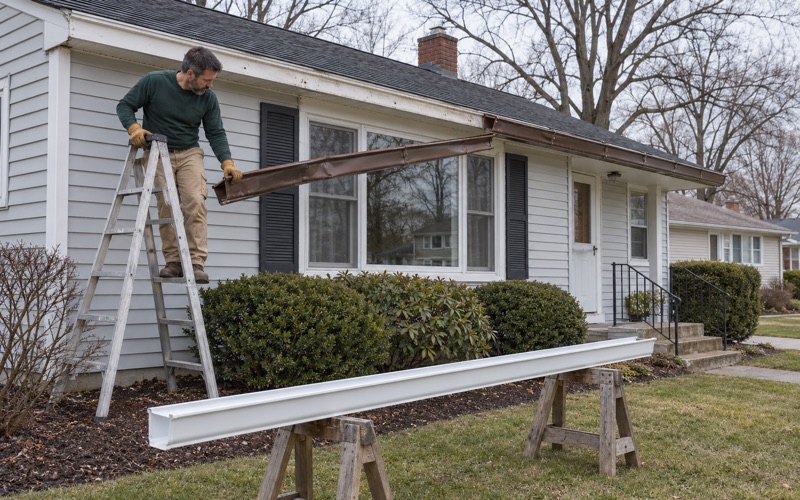
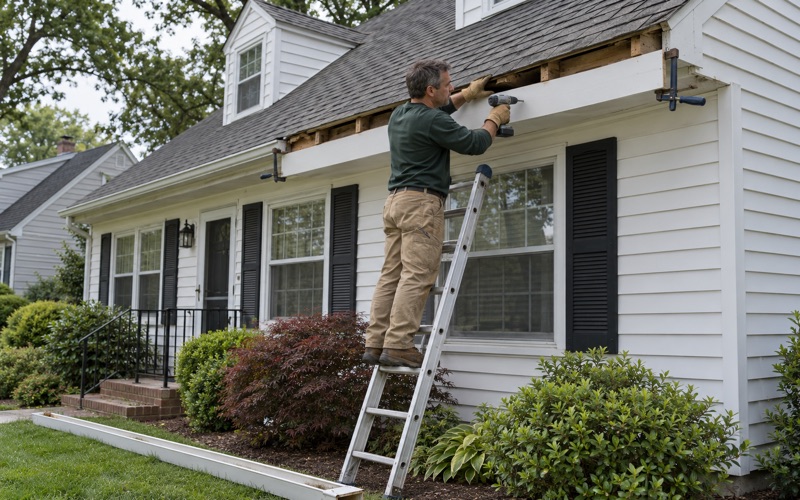
We form seamless gutters on site from coil, one continuous piece for each run, and we size every gutter and downspout to the roof area that actually drains into it. Before anything new is hung, we check the fascia behind the old gutter for rot and show you any soft wood before we replace it, so nothing is covered over and forgotten.
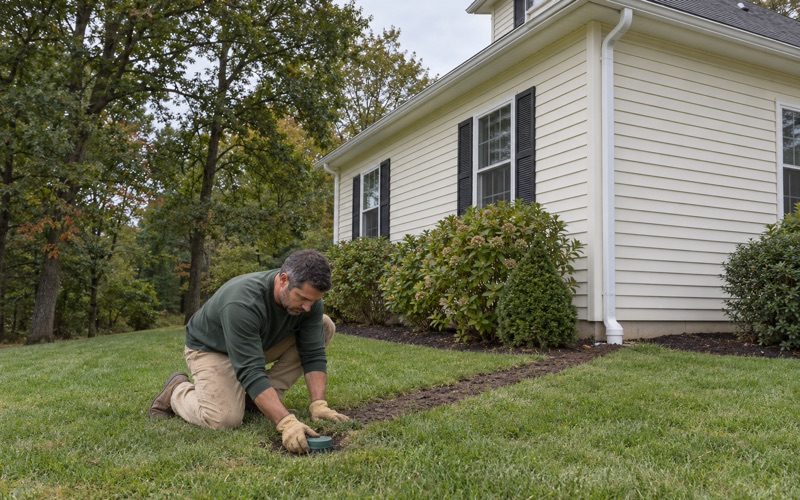
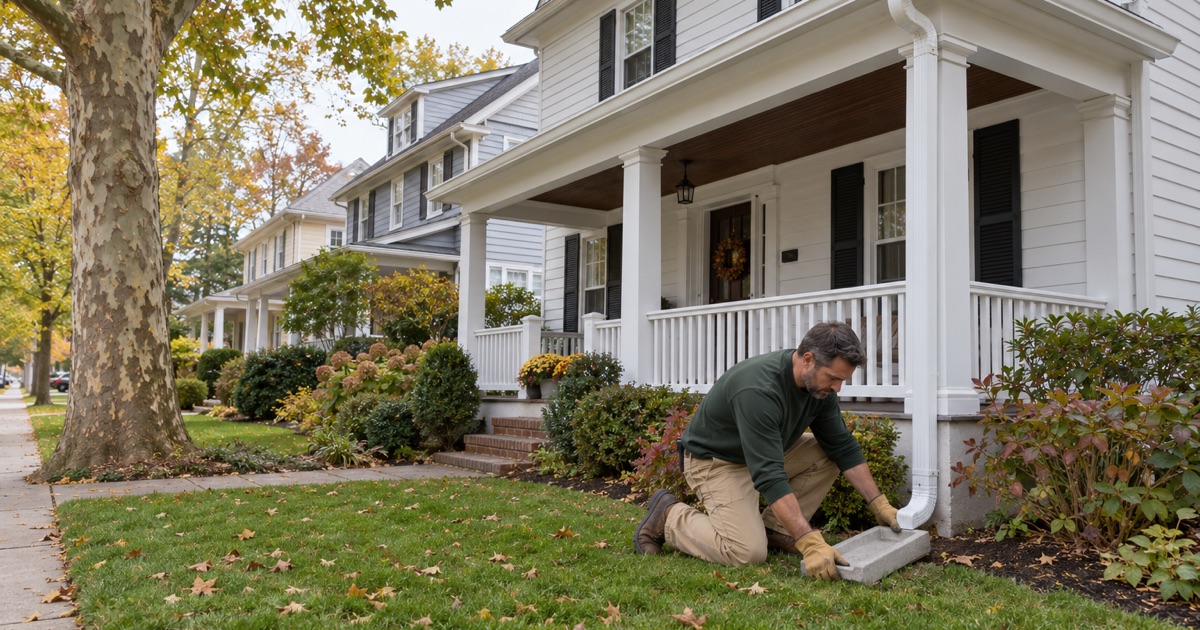
We also follow each downspout to where its water ends up. When it dumps against the foundation, we propose an extension, a pop-up emitter or a dry well, and the estimate states where every leader will discharge. On a lot with a street tree out front, that discharge plan has to respect the tree’s ground as much as the house’s, which is where this page spends most of its time.
Rutherford’s Street Trees and Your Gutters
What the Shade Tree Commission Protects
Rutherford’s Shade Tree Commission advises borough officials and the Department of Public Works on planting, care and maintenance of trees on public property. Its Tree Care and Services page lists acts that are prohibited on public street and park trees, and several reach directly into ordinary gutter work: fastening rope or wire to a tree, storing building materials in the tree protection zone, and disturbing the root system.
The rule that matters most for us is broader. The borough bars making any site improvement, alteration or repair of a structure or building without placing the protection the Shade Tree Commission directs around street trees and nearby trees, and it holds the owner, the contractor or the person in charge responsible. A gutter job is a repair to a building, so we plan for it that way.
Ladders, Lifts and the Protection Zone
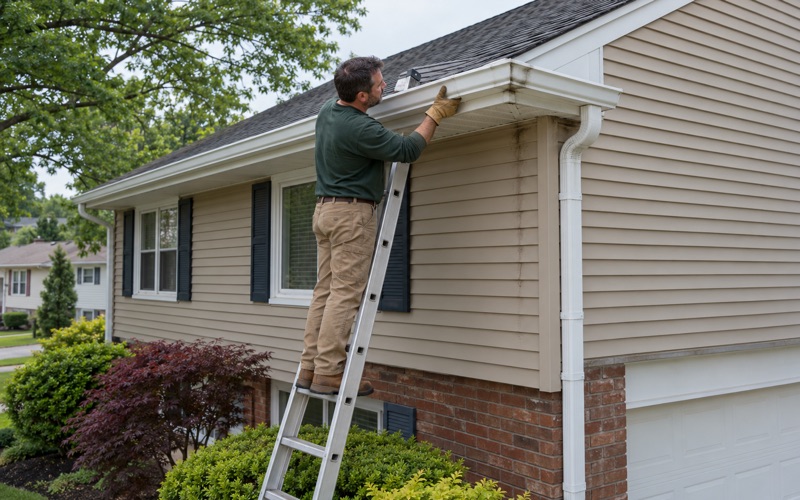
On a narrow front yard, the easiest place to lean a ladder or park a stack of new gutter sections is often against or beside the street tree. We do neither. Ladders go against the house, coil and cut lengths stay on the driveway or the owner’s side of the lot, and nothing is tied off to a trunk or limb while we work the front run.
Old gutters come down in sections and go straight into our truck rather than piling up on the tree lawn. That keeps scrap and fasteners out of the root zone, and it keeps a heavy bundle of aluminum off soil the borough is trying to protect. It also means the front of the house looks the way it did when we arrived.
Calling the Borough First
Residents are asked to call the Rutherford DPW and Shade Tree Commission at 201-460-3000, extension 4008, about public street trees. When a job puts work close to a street tree, we suggest that call before we start, so any protection the Commission wants around the trunk is in place on the first morning rather than added after a question from a neighbor.
The Commission meets on the second Tuesday of each month at 6:00 p.m. at Borough Hall, and its meetings are open to the public. Most gutter jobs never need that level of attention, but an owner planning a larger drainage change near a street tree can raise it there and hear directly from the people who advise the borough on its trees.
Looking for gutters closer to Manville? See Manville Gutters.
The Four-Foot Rule Before Any Drainage Digging
Underground Leaders and the Tree Lawn
The tree rule that shapes drainage work most is plain: no one may excavate, change grade or pave “within four (4) feet of any tree” on the borough’s streets and parks. A related rule keeps stone, cement, sidewalk and similar material out of that same ring. For a homeowner who wants downspout water carried away underground, those two lines decide where a pipe can and cannot go.
An underground leader line that runs from the front corner of the house to the curb usually has to cross the tree lawn, and that strip is exactly where Rutherford’s street trees stand. We lay out a route on paper first, measure from each trunk, and keep trenching outside the four-foot ring. If no route clears it, we say so and look at a different outlet.
Dry Wells on the House Side
A dry well works best on the owner’s side of the lot, set back from the house and away from the street tree’s protected ground. The state stormwater rule keeps the bottom of a dry well 2 feet above the seasonal high water table, so we confirm there is room for one before we price it rather than promising it at the door.
Where a dry well does not fit, a pop-up emitter at the end of a short buried run can release roof water onto lawn that slopes away from the foundation. The goal is the same either way: water leaves the downspout, clears the footing, and soaks in on ground the owner controls, not in the protected ring around a tree the borough looks after.
Leader Outlets, the Sewer and the Grade
However the water travels, it never goes into the sanitary sewer. We do not tie leader outlets into a sewer line, and the written estimate names the discharge point for every downspout on the house, front and back. If an old leader connection to a sewer turns up on a prewar house that has changed hands over the years, we flag it rather than reconnecting to it.
Grading matters as much as the pipe. Under the 2021 New Jersey edition of the residential code, ground should fall 6 inches within the first 10 feet from the foundation, and an extension laid on flat or back-sloped soil just moves the puddle. Where the yard tips toward the house, we tell you before quoting an extension that cannot do its job.
Gutter Guards Under a Mature Canopy
What the Borough Plants Along the Street
Rutherford’s recommended street-tree list puts small trees under power lines, species such as trident maple, serviceberry and ornamental cherry that grow no greater than 30 feet tall at maturity, and medium trees of 30 to 40 feet elsewhere. On a block of two-story prewar houses, trees of that height can reach out over the front of the roof.
That canopy can drop something into the gutters for much of the year: petals in spring, seed after that, and leaves in the fall. Front runs facing the street tend to collect the most, and the downspouts on that side are the ones most likely to clog at the elbow, where debris packs against the bend and backs water up the run.
Matching the Screen to the Trees
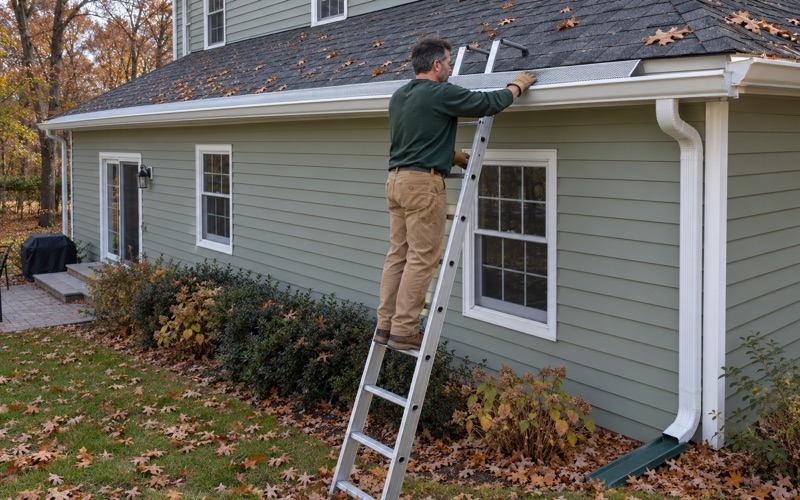
We choose guards for the trees on your lot, not from one catalog page. Broad leaves sit on top of a coarse screen and dry out, while seeds, petals and fine debris slip through openings that leaves cannot. Stainless steel micro-mesh guards keep out the smaller material a mixed street canopy produces, though they still need an occasional brushing off.
Guards are not a reason to forget the back of the house. A yard tree over the rear roof may call for a different screen than the street tree out front, and we will tell you when one side needs a guard and the other does not. Paying for a guard on a run with nothing overhead is money better spent on drainage or fascia.
Cleaning Visits and Storm Debris
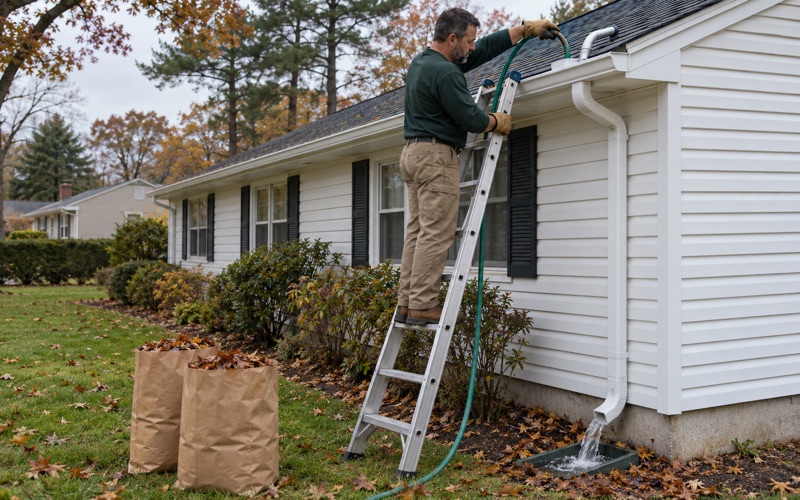
When we clean gutters, we flush every downspout to prove it runs, bag the debris and take it with us, so nothing ends up on the lawn or at the curb beside a street tree. You get before-and-after photos of each run, which is the simplest way to see what the canopy put into your gutters since the last visit.
Storms add branches to the routine. On June 6, 2026, thunderstorms left downed branches throughout Rutherford, and the borough’s clean-up notice named Insley Avenue, Edgewood Place and Hackett Place as the hardest hit. After a night like that, we check gutters for limbs and bent hangers, but a damaged street tree is a call to the borough, not something we cut.
Gutters on Rutherford’s Prewar Houses
Original Fascia on Older Homes
Rutherford’s housing is old by any measure: 42.8 percent of its homes were built 1939 or earlier, and another 34.4 percent went up between 1940 and 1959. On houses of that age, the gutter often hangs on original fascia, and that board has spent decades behind a trough of wet leaves. We probe it along every run before new gutters go up.
Soft spots are shown to you before any wood is replaced, and the estimate lists that work separately. Fascia and trim on a pre-1978 house may carry lead paint, so we follow the EPA Renovation, Repair and Painting rule when we disturb painted surfaces. That rule changes how we cut, collect and clean up, not whether the job can be done.
Box Gutters, Half-Round and Copper
Some prewar houses also have built-in or box gutters set into the roof edge, sometimes with a newer hanging gutter added in front of them. We look at both before recommending anything, because a hanging gutter that hides a rotted box gutter only moves the problem. Where a box gutter is sound, relining it can be the better choice than abandoning it.
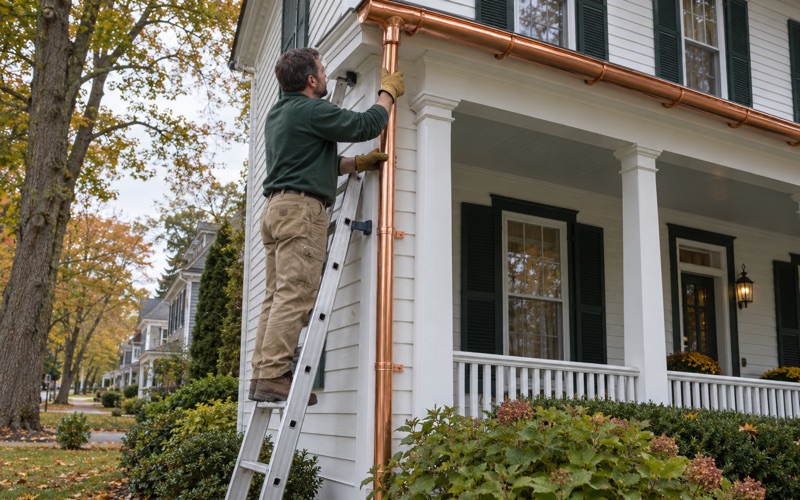
For owners who want the gutters to suit the house, we match copper and half-round work to its age and style, including half-round gutters with a double-bead profile and 16-ounce copper that weathers to a patina. On many houses, seamless K-style gutters in .032 aluminum coil remain the practical choice, and we will say which fits the budget and the house.
Owners Making the Call
Most of these decisions rest with the owner. Rutherford is largely owner-occupied, at 64.3 percent, and its Historic Preservation Committee is advisory: as of 2019 its inventory was not required in permitting. Matching an original gutter profile on an inventoried house is therefore your choice, and we treat it as one, laying out the options instead of assuming.
The estimate puts new gutters and repair work on separate lines, because New Jersey taxes them differently: new gutters can be an exempt capital improvement, while repairing gutters is a taxable repair. With the tree plan, the discharge points and the fascia findings on one page, you can see what the job involves before a single ladder goes up.
- 20+ Years on Gutters
- Seamless, Formed On Site
- Before-and-After Photos