
Middletown Quality Gutters handles soffit and fascia repair in Middletown Township, NJ, serving surrounding cities including Red Bank, Holmdel, Eatontown, Aberdeen and Tinton Falls. In more than 20 years of gutter work, we have learned that the board behind the gutter is where a drainage problem does its quietest damage. Fascia rots out of sight, and the first visible sign is often a gutter leaning off the house.
We treat fascia and soffit as part of the gutter system rather than a separate trade. A rotted board needs replacing, but it also needs the leak, overflow or missing flashing that rotted it found and fixed. Otherwise the new wood goes the same way as the old.
Whenever we take a gutter down, we probe the fascia and show you any soft wood before replacing it. You see the damage, understand why it happened and decide on the repair with the facts in front of you.
Fascia Board Repair
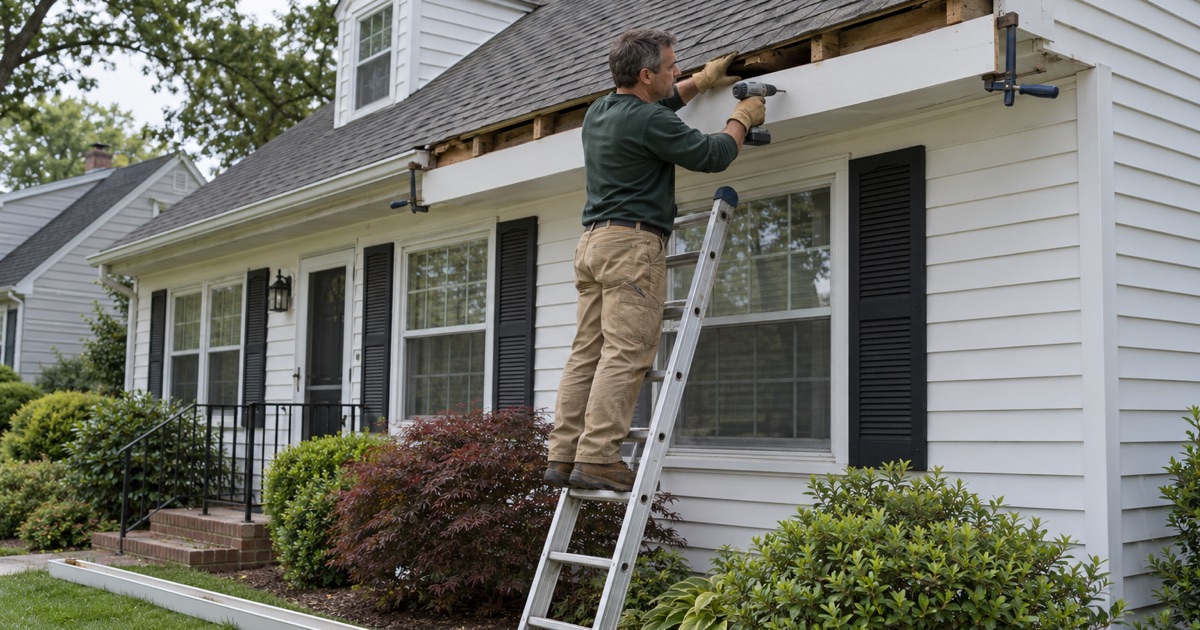
Why Fascia Rots Behind Gutters
Fascia boards take water from every direction when the gutter system fails. Overflow pours over the back of a clogged gutter, leaking joints drip onto the board, and water curls under a roof edge that has no drip edge. Each soaks wood that was never meant to stay wet.
Old spike-and-ferrule gutters make it worse, because every spike is a hole driven through the paint into bare wood. Water follows the spike in and rots the board from the inside. By the time the gutter sags, the wood around the spikes is often soft.
Finding and Showing Soft Wood
When a gutter section comes down, we press and probe along the fascia, at the corners and around old fastener holes. Rot usually concentrates near downspout outlets, inside corners and anywhere water has been overflowing. We mark each soft section and photograph it.
Then we show you what we found before replacing anything. Some boards need only a short section replaced, while others need a full length. Seeing the wood yourself takes the guesswork out of the repair estimate.
Fascia Replacement Materials
We replace rotted fascia with new wood, PVC trim or wood covered in an aluminum wrap. Wood matches older houses and takes paint well, PVC trim cannot rot, and aluminum wrap gives a metal finish that never needs painting. Each has a place depending on the house.
Wrap only works over sound wood. Bending aluminum over a soft board traps moisture and hides the rot while it spreads. We replace bad wood first and then finish it in whichever material you choose.
Soffit Repair
Vented Soffit and Attic Air
The soffit is the underside of the roof overhang, and on many houses it carries vents that let air into the attic. That airflow carries out heat and moisture, which helps reduce condensation and the attic heat that feeds ice dams. Damaged or painted-over soffit vents cut that airflow.
When we repair soffit, we keep or restore its ventilation. Vented vinyl and aluminum panels, or screened vents set in wood soffit, let air pass while keeping insects out. We also check that insulation in the attic is not blocking the vents from inside, where we can see it.
Animal Damage and Entry Points
Loose or rotted soffit panels are an open door for squirrels, birds, bats and wasps. Animals chew or push through weak spots to reach the warm attic above. Gnawed edges, droppings and nesting material near the eaves are common signs.
Once the animals are out, we replace the damaged panels and fasten them securely so the gap cannot be reopened. Vents are screened rather than sealed, so the attic still breathes. Removing the animals themselves is a job for a wildlife specialist, and we work around that timing.
Soffit Materials
Vinyl soffit is common on newer houses and resists moisture, aluminum soffit is stiff and fire resistant, and wood soffit appears on older and custom homes. We match the existing material and profile where only a section is damaged. Where the whole soffit is failing, we can replace it in any of the three.
On a house with wood soffit, matching the board width and molding matters if the repair is going to blend in. We cut and fit new pieces to the existing detail. The new wood is primed and ready for paint.
Roof-Edge Details That Protect New Trim
Drip Edge and Gutter Apron
Many fascia boards rot because the roof edge above them has no drip edge or gutter apron. Without those metal strips, water runs off the shingles, curls back under the edge and soaks the top of the fascia. New wood under a bare roof edge will rot again.
When we replace fascia, we add drip edge or gutter apron under the first course of shingles so water drops cleanly into the gutter. This is a small part of the job that protects the much larger investment in new trim.
Kickout Flashing at Sidewalls
Where a lower roof runs into a sidewall, water flows down the step flashing and off the end of the roof. Without a kickout flashing there, it runs down the siding and behind the trim, rotting the fascia and sometimes the wall framing. That corner is one of the most common places we find hidden rot.
We install kickout flashing at the bottom of each roof-to-wall joint, steering water into the gutter. Where the trim behind it has already rotted, we replace it first.
Older and Historic Houses
Lead Paint on Pre-1978 Trim
On houses built before 1978, the paint on fascia and soffit may contain lead. Cutting, scraping or prying that trim can release lead dust onto the ground and into the house. The EPA Renovation, Repair and Painting rule sets work practices for exactly this kind of repair.
We follow those practices when a repair disturbs painted trim on an older house. That means containing the work area, limiting dust and cleaning up thoroughly before we leave. It is part of the job, not an extra.
Historic District Trim
In Middletown’s historic districts, including Middletown Village, Navesink, Locust, Chapel Hill and Monmouth Hills, exterior work goes to the Landmarks Commission for review. Replacing decorative wood trim with plain modern material can change the look of a period house. We match profiles and materials so repairs stay true to the house.
On these homes we usually repair in wood, cut to the original dimensions and detail. We can provide the specifics the commission asks for. The same care goes into matching any half-round or copper gutters that hang on the restored trim.
- 20+ Years on Gutters
- Seamless, Formed On Site
- Before-and-After Photos